
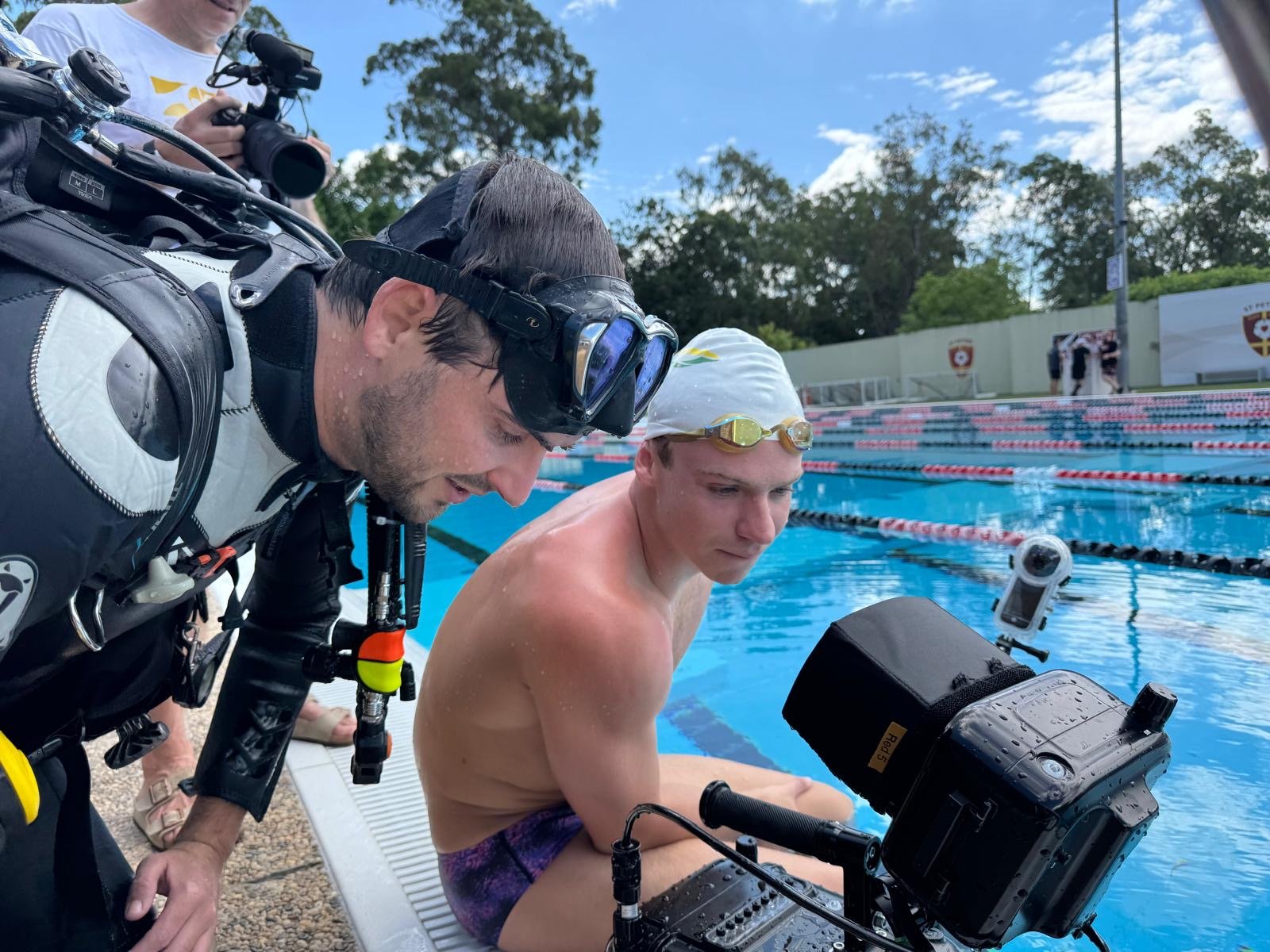
Behind the Lens on Leon Marchand: Beyond Gold Series
When most people think about Olympic swimming, they picture race day. The crowd. The atmosphere. The medals.
What they do not see are the thousands of hours that happen long before an athlete ever steps onto the blocks.
Earlier this year, I joined the production team behind Leon Marchand: Beyond Gold as an underwater cinematographer and topside camera operator, filming Leon's Australian training campaign in the lead up to the World Championships following his extraordinary multi gold medal success at the Paris Olympics.
Produced by Xavier Marchand and Qlad Labs France, and premiering on France.TV, the series follows Leon during a period where much of his life revolved around one thing: training.
As a filmmaker, that meant documenting not just the performances everyone knows him for, but the thousands of repetitions, early mornings, and long days that sit behind them.
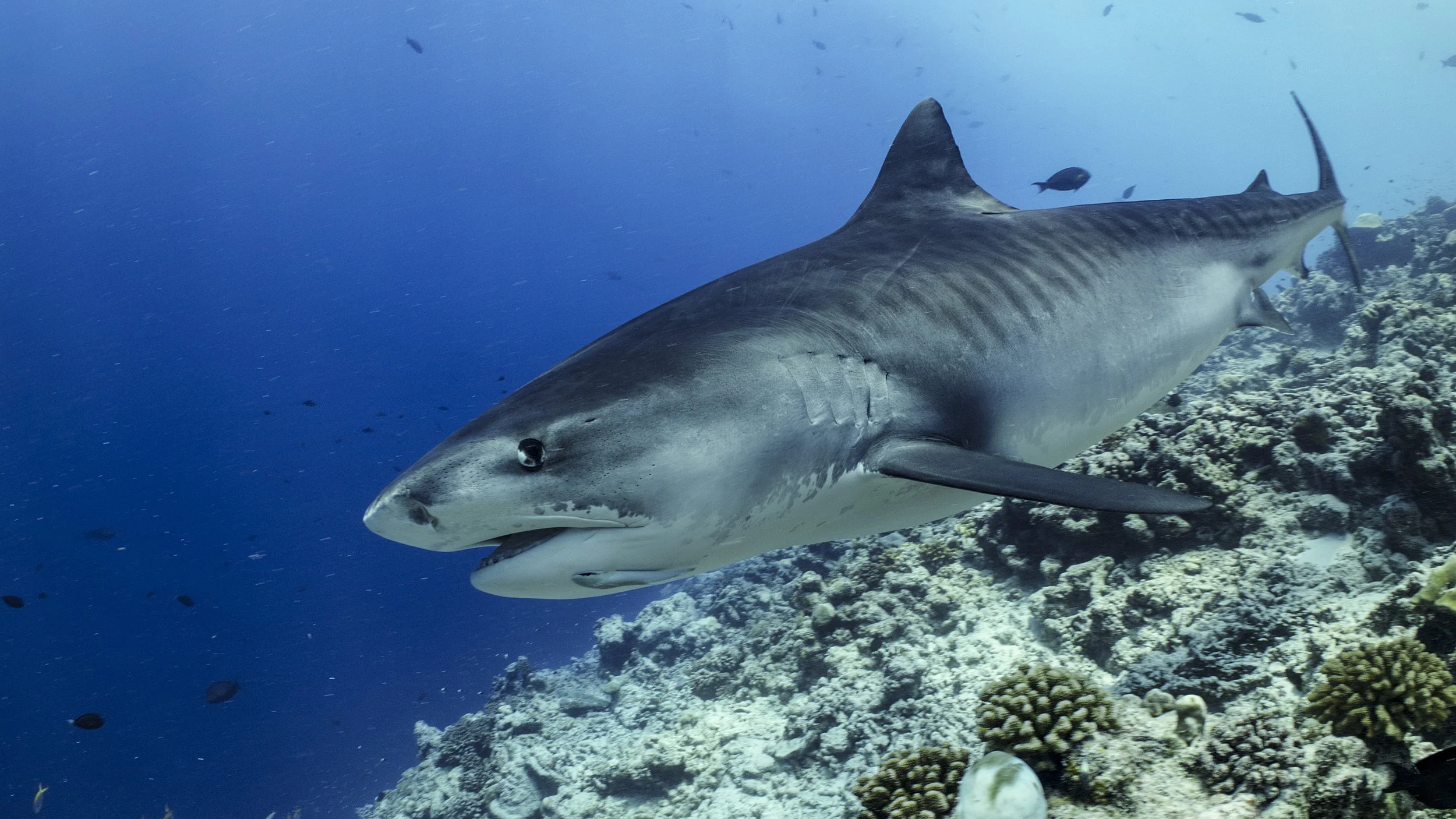
Behind the Scenes of Netflix’s All the Sharks: An Insane Underwater Shoot!
Working on Netflix’s All the Sharks was on a scale I’ve never experienced before. At times, there were over 50 crew on location and more than three tonnes of camera equipment. Every day felt like orchestrating a mobile underwater production unit capable of moving between multiple countries, ecosystems, and shark species, all while keeping the operation safe, seamless, and cinematic.
The Gear and Camera Set Up:
Underwater, we were shooting on an assortment of RED cameras: my 8K RED V-Raptor, two more V-Raptor VV models, a RED Gemini, RED Monstro, and RED Helium 8K, a total of 6 RED Underwater cinema systems. Each had a selection of Gates and Nauticam housings, domes, and lenses. The technical complexity alone was staggering, syncing camera frames, white balances, timecodes, and exposure across different cameras while maintaining the freedom to capture unpredictable shark behaviour.
Topside, the production used 4 Varicams, 4 Sony FX3s, a range of FX6s, 30+ GoPro’s rigged absolutely everywhere, and countless drones ensuring that aerials, presenter sequences, and surface interactions were fully covered.
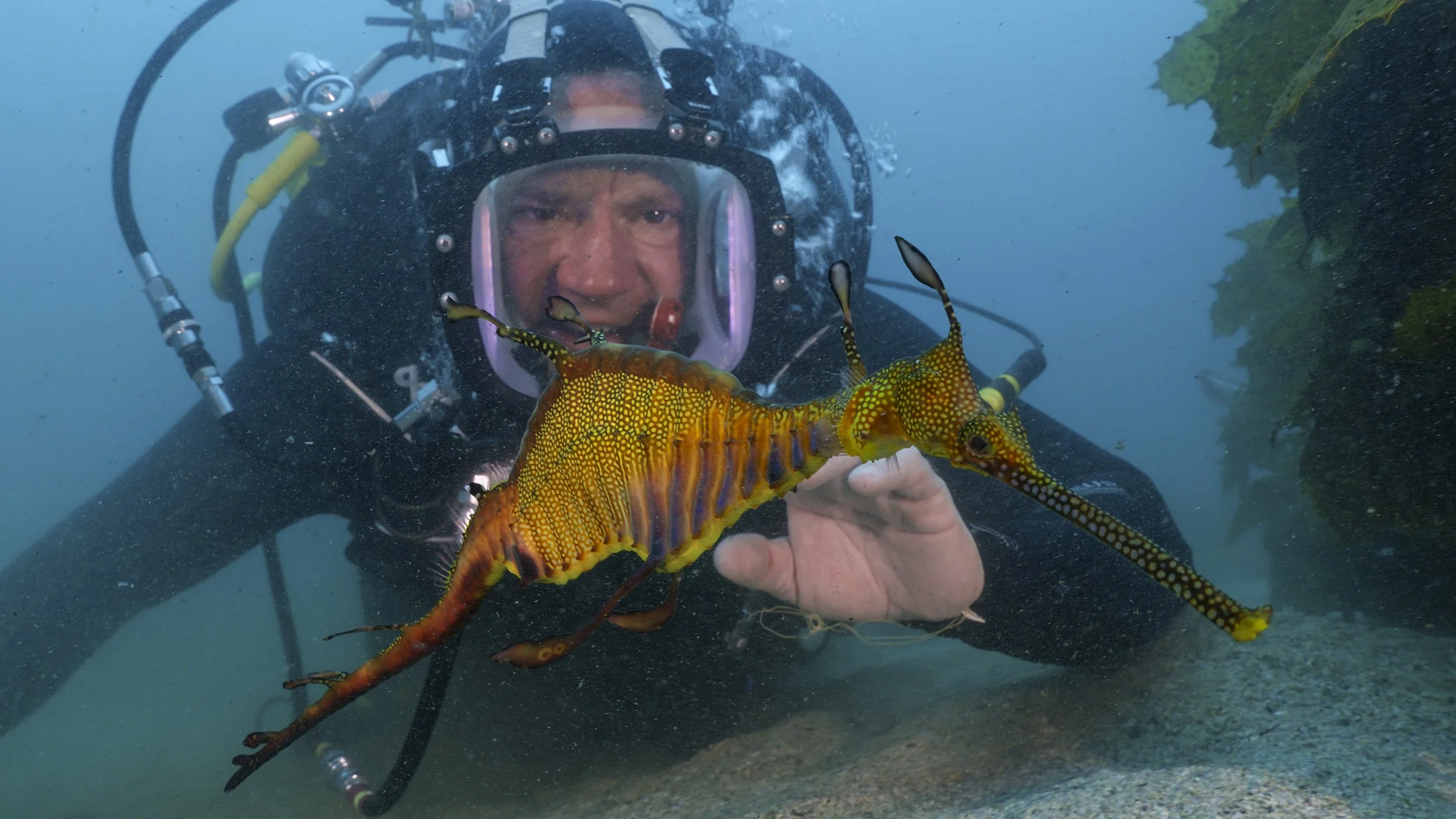
Behind the Scenes Filming Deadly 60 with Steve Backshall
Working on Deadly 60 is a bit like jumping onto a rollercoaster in the middle of the first loop, it’s fast, chaotic, and completely exhilarating. I had the privilege of filming parts of Season 6 and the upcoming Season 7, both underwater and topside as the Director of Photography (DOP), and it’s an experience that pushes every aspect of your cinematography skills.
The Challenge of the Two Shot:
One of the toughest things we do is the “two-shot”, getting Steve and the animal in frame together, both above and underwater. For example, filming Weedy Sea Dragons in Sydney or Grey Nurse Sharks in Jervis Bay, the animal isn’t going to pause for the presenter. It’s about positioning Steve in a way that feels natural while keeping the composition cinematic, and anticipating how the animal will move so the shot works from start to finish, and there’s enough time for Steve to present,
Underwater, this is often a challenge. You have currents, visibility, and we’re operating in a world that as humans, we’re simply not meant for. This is where knowing how to read wildlife, and how to position yourself, with both you and the presenter working in split second tandom is an absolute necessity. Both myself and Steve have to read the wildlife, and postion ourselves in a manner that allows both Steve and the animal to stay in frame, often with no time to communicate underwater. This may sound simple, but there’s a lot of moving parts! But when it works (and with experienced presenters and operators, it often does), it’s cinematic magic.
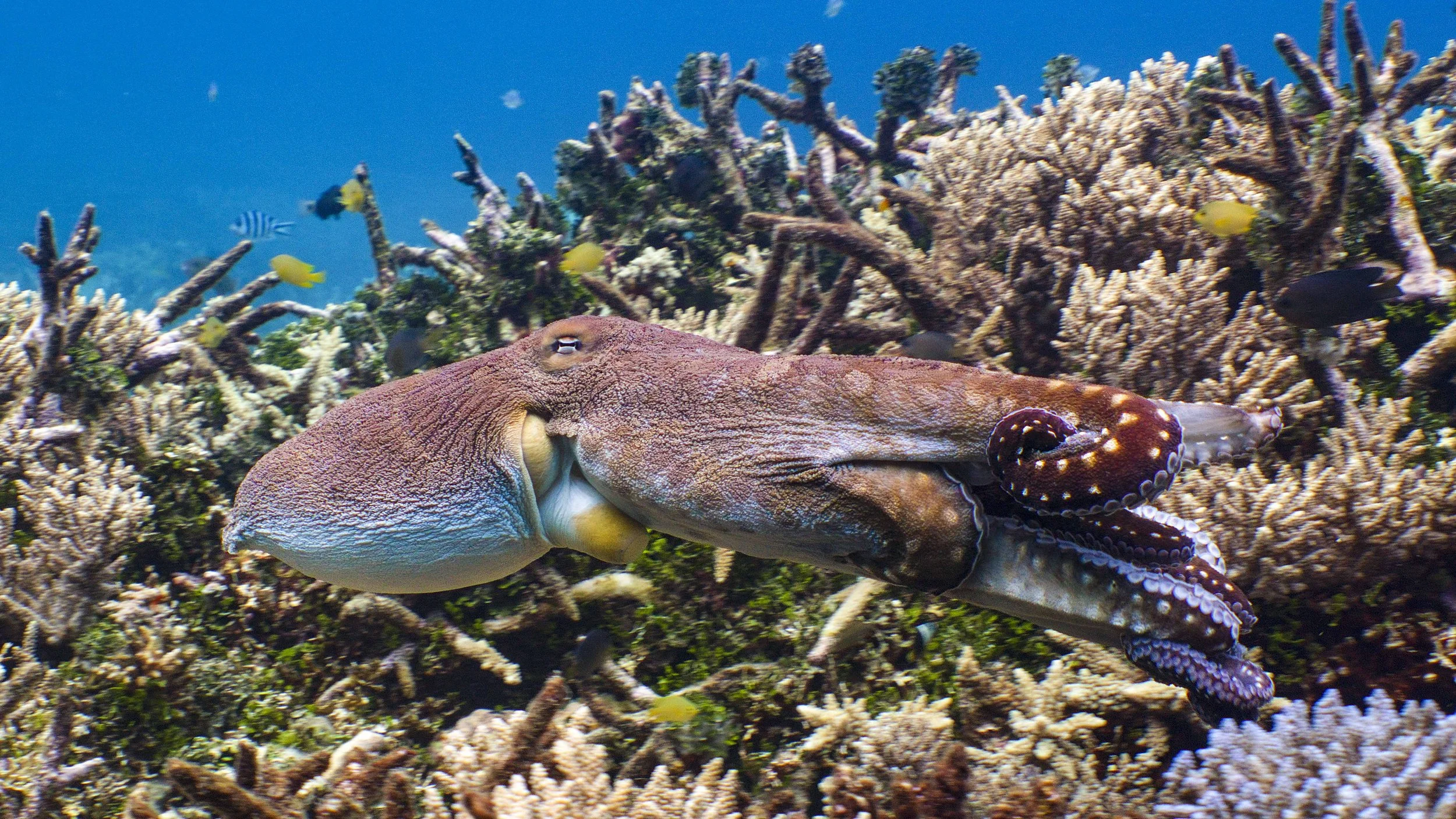
Filming a Hunting Day Octopus on the Great Barrier Reef in 8K
There’s nothing predictable about filming a day octopus.
Some bolt the second they feel pressure in the water. Others hold their ground, watching you just as closely as you’re watching them. This particular shoot on the Southern Great Barrier Reef came after a few days of doing very little filming at all and a lot of observing.
I’d found an individual working a section of reef near Heron Island. Rather than rush it, I spent time learning its routine. Where it sheltered. How far it ranged. When it chose to move. When it chose to hunt.
That patience is what led to this 8K octopus hunting stock footage sequence.
Understanding Octopus Behaviour Before You Hit Record
Day octopus are serious predators. When they hunt, there’s intent behind every movement.
They move across coral bommies using their arms almost like legs, then suddenly jet across open sand when they feel exposed. As they transition between coral, rubble, and sand, their skin shifts constantly. Colour, contrast, texture. It’s not dramatic for the sake of it. It’s camouflage working in real time.
In this sequence, you can see the octopus probing into crevices, feeling for crabs and small reef fish. It pauses, recalibrates, then moves again. Every decision is calculated.
To capture that kind of natural behaviour on the Great Barrier Reef, you need more than just a good camera. You need time in the water.

Filming Ocean with David Attenborough
Earlier this year, I had the incredible opportunity to work on and contribute to Ocean with David Attenborough. As an underwater cinematographer, it was a huge honour to be a part of the film. Sir David Attenborough has inspired generations of wildlife filmmakers, and to get the call to contribute to one of his films is the highlight of my professional career. A true career milestone.
My work for Ocean focused on the Great Barrier Reef, specifically around the 2024 global mass coral bleaching event. At the time the bleaching hit, I had already spent nearly 300 days filming this one particular section of reef for another natural history film I have been working on, a vibrant, bustling ecosystem. Almost overnight, I watched this incredible ecosystem transform into a stark, white landscape. It was devastating.
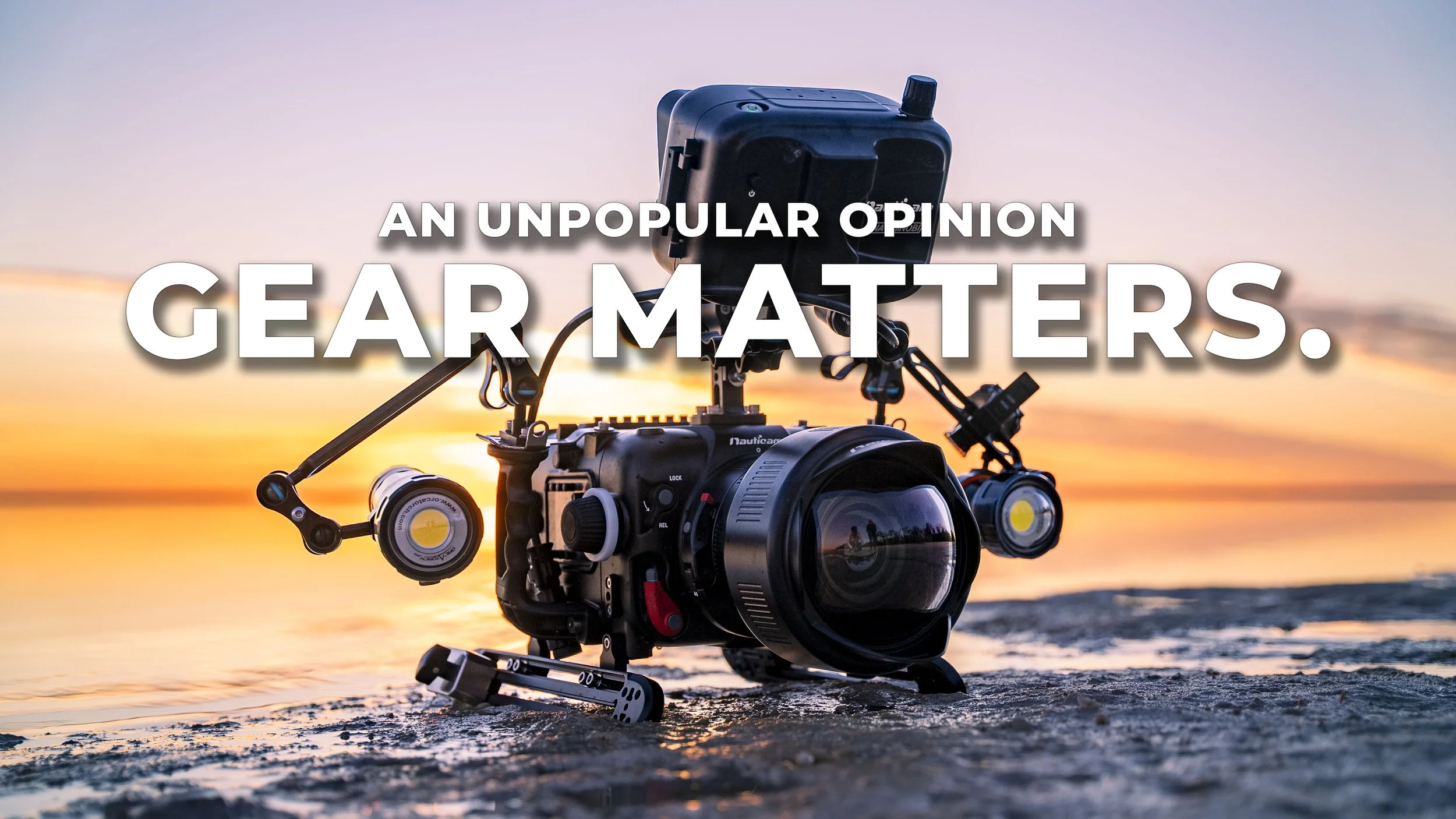
Camera GEAR DOES MATTER in Filmmaking.
Alright we need to settle something here. The internet absolutely loves to say that “Gear Doesn’t Matter”, and it’s become a popular trend for photographers and videographers to make videos on why camera gear does not matter. And this may be a controversial opinion, but in my experience working as an underwater and wildlife cinematographer, I can absolutely say that gear does matter, and owning and operating particular systems, and having experience with certain cameras is a prerequisite to many projects.
But this statement of gear not mattering does come from somewhere important for beginners starting their career, and while overall the statement in my experience is wrong, it does come from a place of good advice.
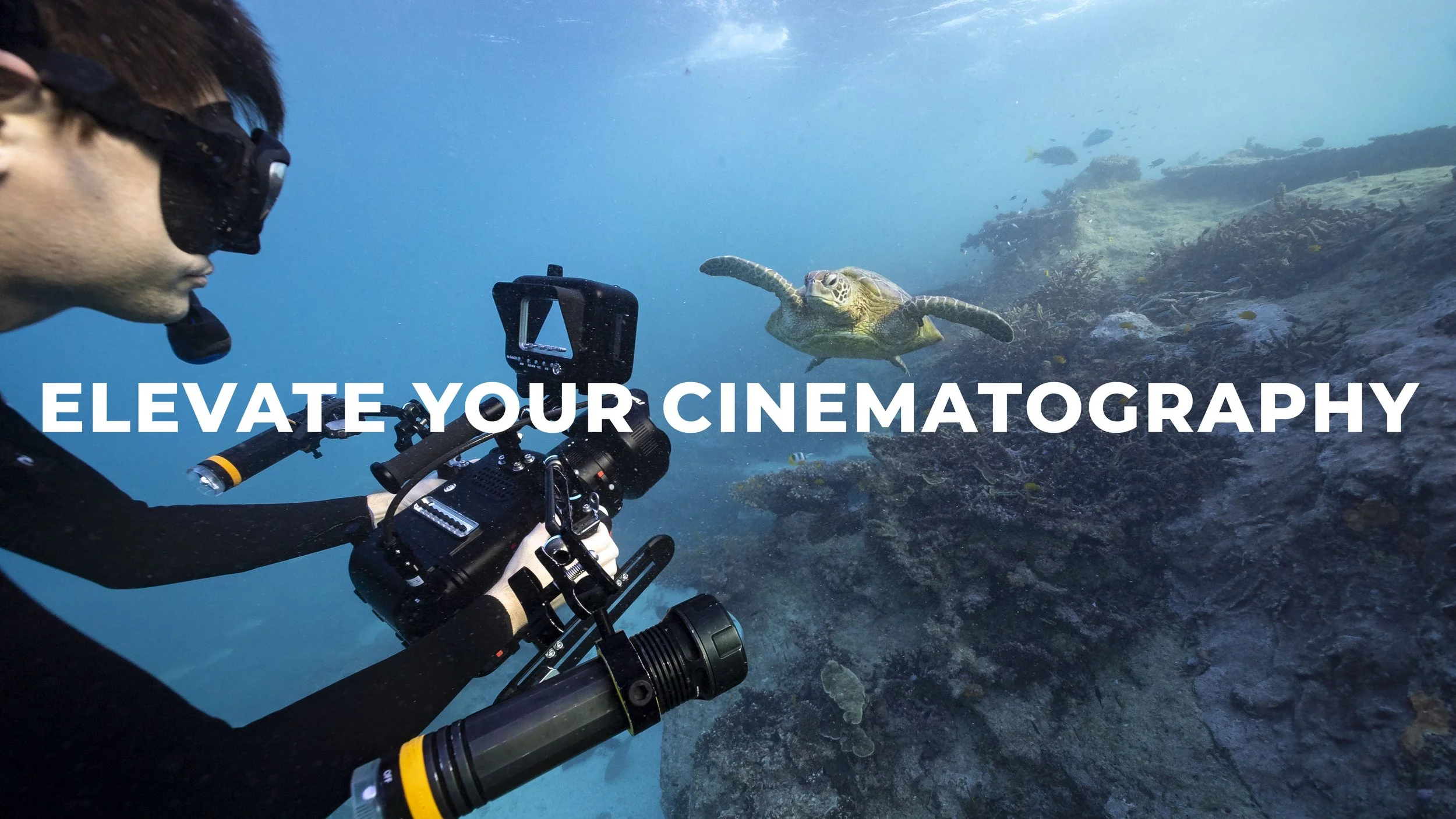
Elevating Your Documentary Cinematography: 5 Unique Strategies
As important as making your first short film is to refining your craft and gaining experience, the reality is that our first film or two is never going to be all that ground breaking, and while it may be well received, looking back on it a year or two later the perfectionist inside you is not going to be all that impressed, as by the time a film is finished and released, we’ve already grown so much as filmmakers.
But here are 5 unique strategies to elevate your documentary cinematography to the next level. If you're looking to break away from the ordinary and make your cinematography stand out, maybe a few of these tips can help.
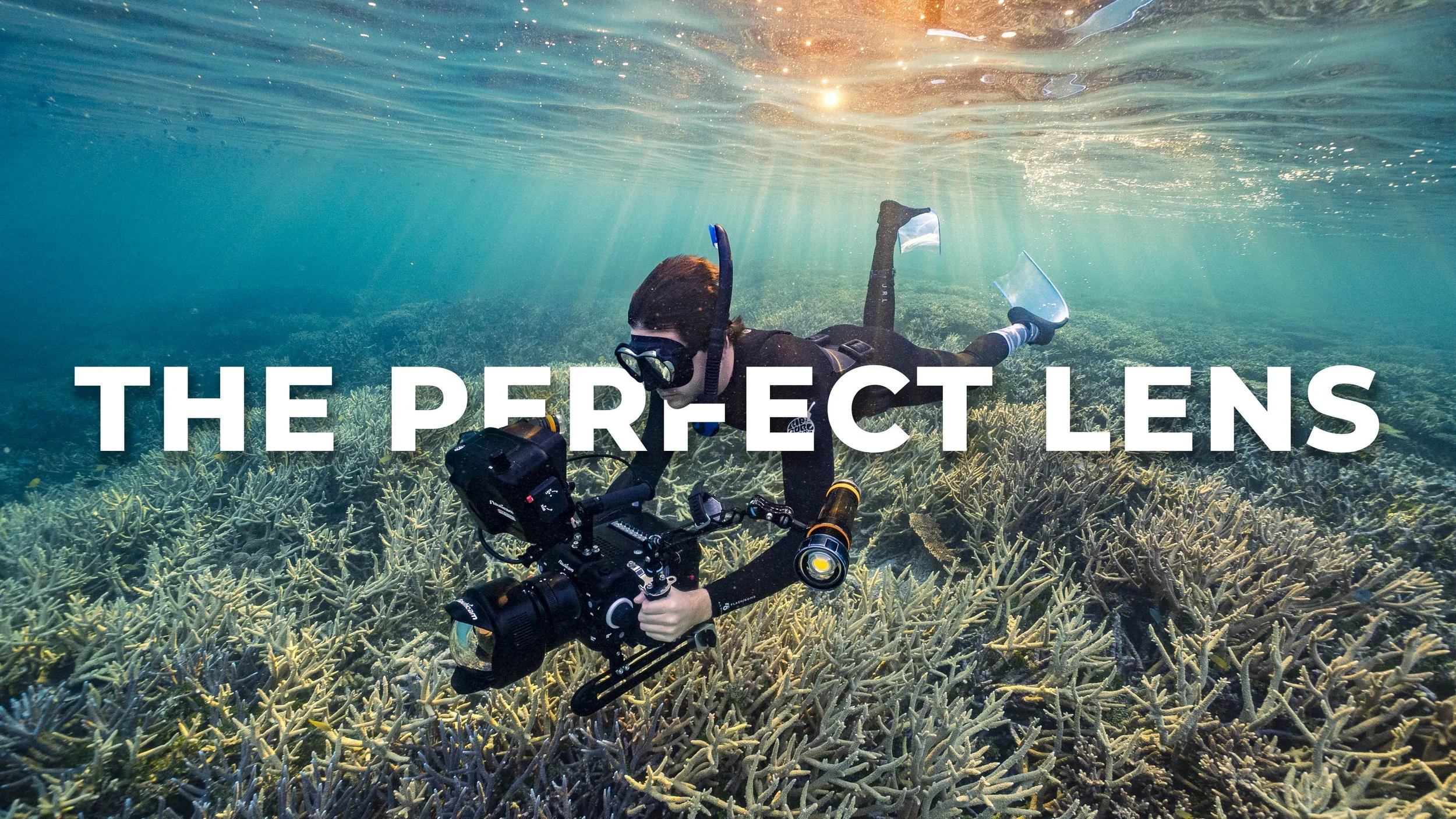
Ultra Wide Angle & Macro in 1 - The Most Versatile Lens in Underwater Cinematography
Anyone who shoots underwater will know just how painful it is when you’ve invested thousands of dollars into underwater camera equipment, and for the first time in months you’ve decided set your rig up to shoot macro. You jump in, and almost immediately you see a train of manta rays swimming overhead, or you encounter your first great white or tiger shark, and there you are unable to capture this once in a lifetime encounter as you decided to shoot macro. It’s a story as old as underwater photography itself, but what if I told you there are solutions available to shoot both wide angle and macro on the same lens.
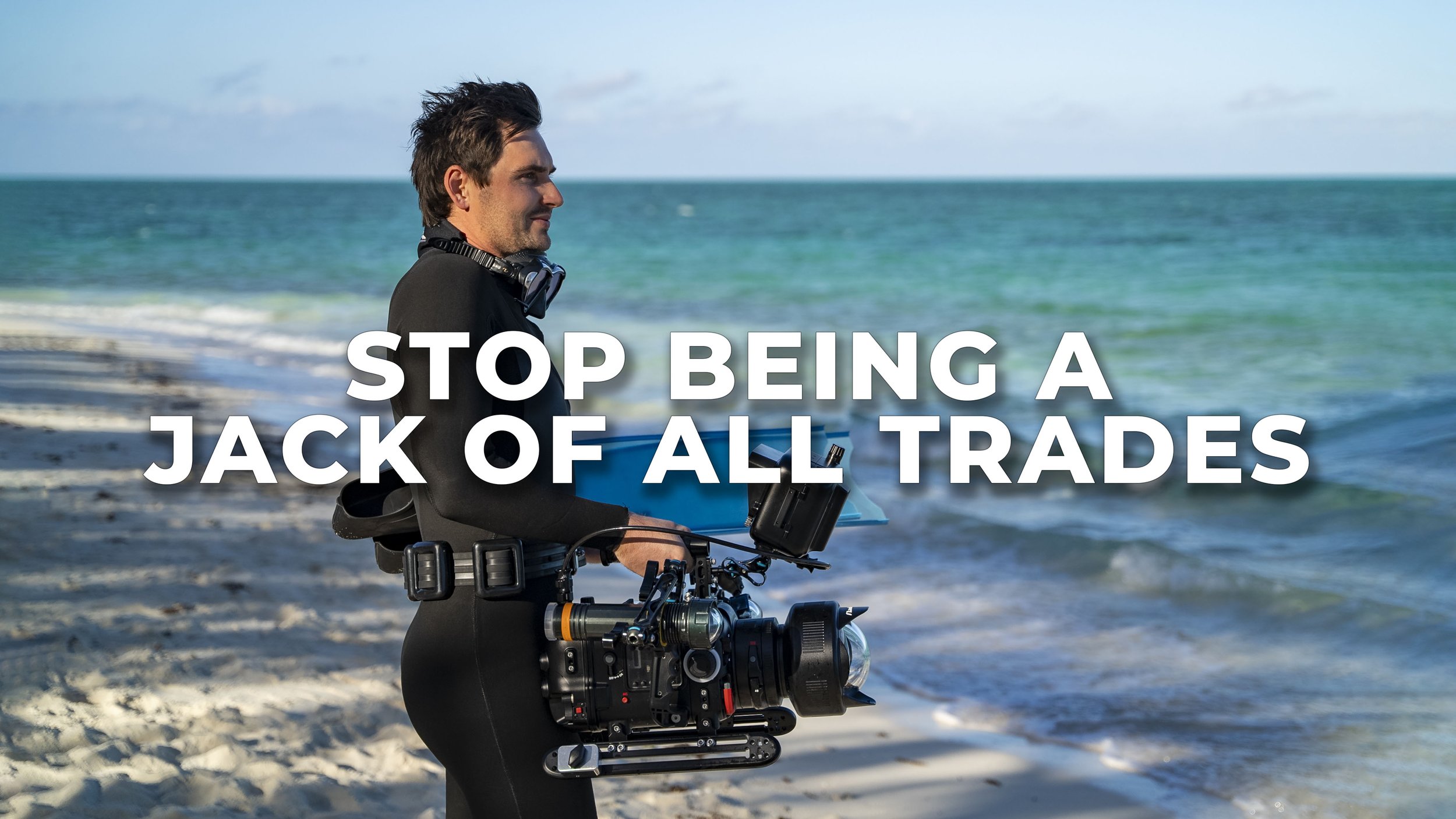
Finding Your Filmmaking Sub Niche
As a filmmaker, there are a seemingly countless creative avenues to explore. With so many different styles and different worlds of filmmaking, it’s impossible to be able to master them all. But as most of us start out our videography journey, due to practicality reasons we immediately fall into a one-man band type production, you know, we are the director, the topside videographer, the drone pilot, the gimbal operator, the sound recordist, the underwater videographer, the fpv pilot, the editor, the photographer, and the colourist.
With so many hats to wear videographers starting out inevitably spread themselves so thin, that they fall into the jack of all trades, master of none category. This is by no means a bad thing, and it does provide a really good understanding of how the entire process works, and I’d argue that starting here is actually beneficial in the long run, but should you wish to move onto bigger and better productions this is something that almost all of us have had to deal with at one point or another.
The Case Against 16-35mm Lenses: Generic Perfection
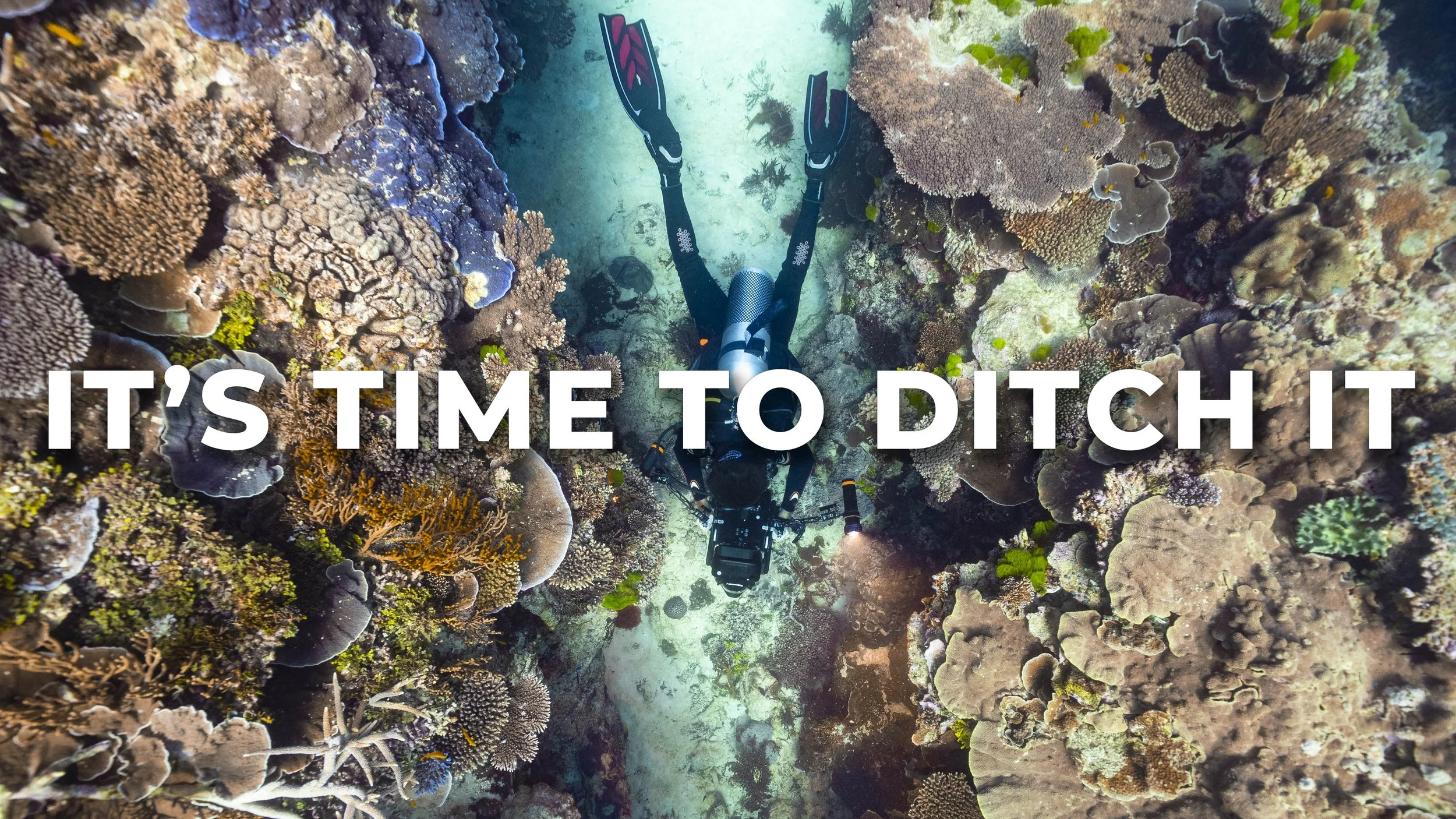
The infamous 16-35mm, we all own one, and it is very likely one of the first lenses you ever picked up for your camera, but it’s time to move on. This video is likely going to rustle some feathers, as this lens is a very popular choice in the industry, particularly for videographers and photographers starting their journey, and I used this lens for years as my go to workhorse underwater lens, and this realisation is truly something that I wish I had learnt sooner. The 16-35 is hindering your work, and is producing the most generic look you can capture, hear me out.
Managing Filmmaking Data Like a Pro | On Set & at Home
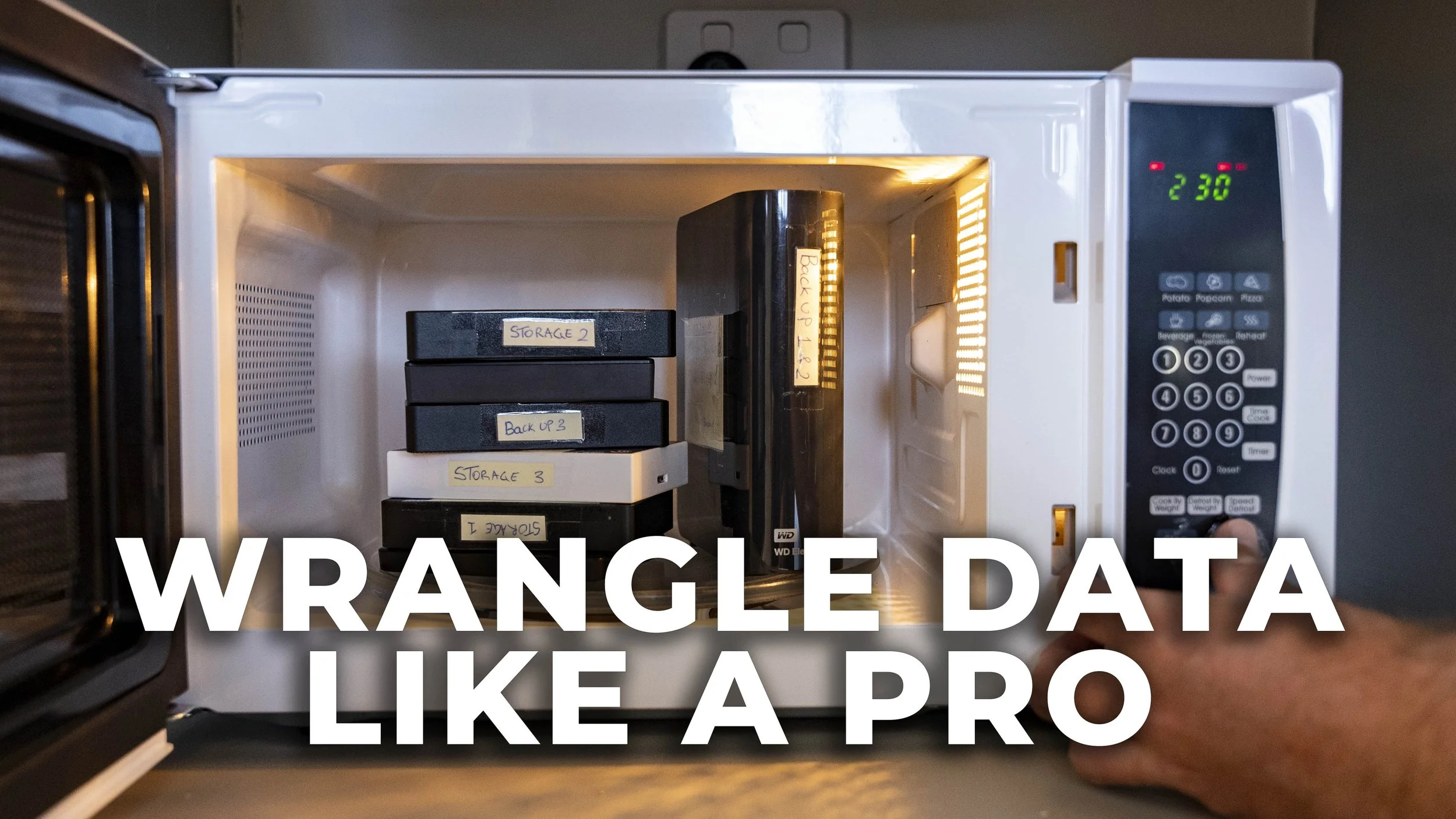
As cinematographers and filmmakers we own tens of thousands of dollars of camera equipment, but for most of us, if our house was burning down and we could only save 1 item, I think we all know that we’d save our data and our footage above anything else, as without a doubt, the most valuable thing we own is our work and our files. And this is only made more extreme for ongoing projects that haven’t yet been delivered to the client, and when we’re on set. Our data is our livelihood, and if we lose those harddrives, or we make a mistake on set and format the wrong card the effects on our films, clients, and business would haunt us for years.
How to Travel With Gear as a Filmmaker
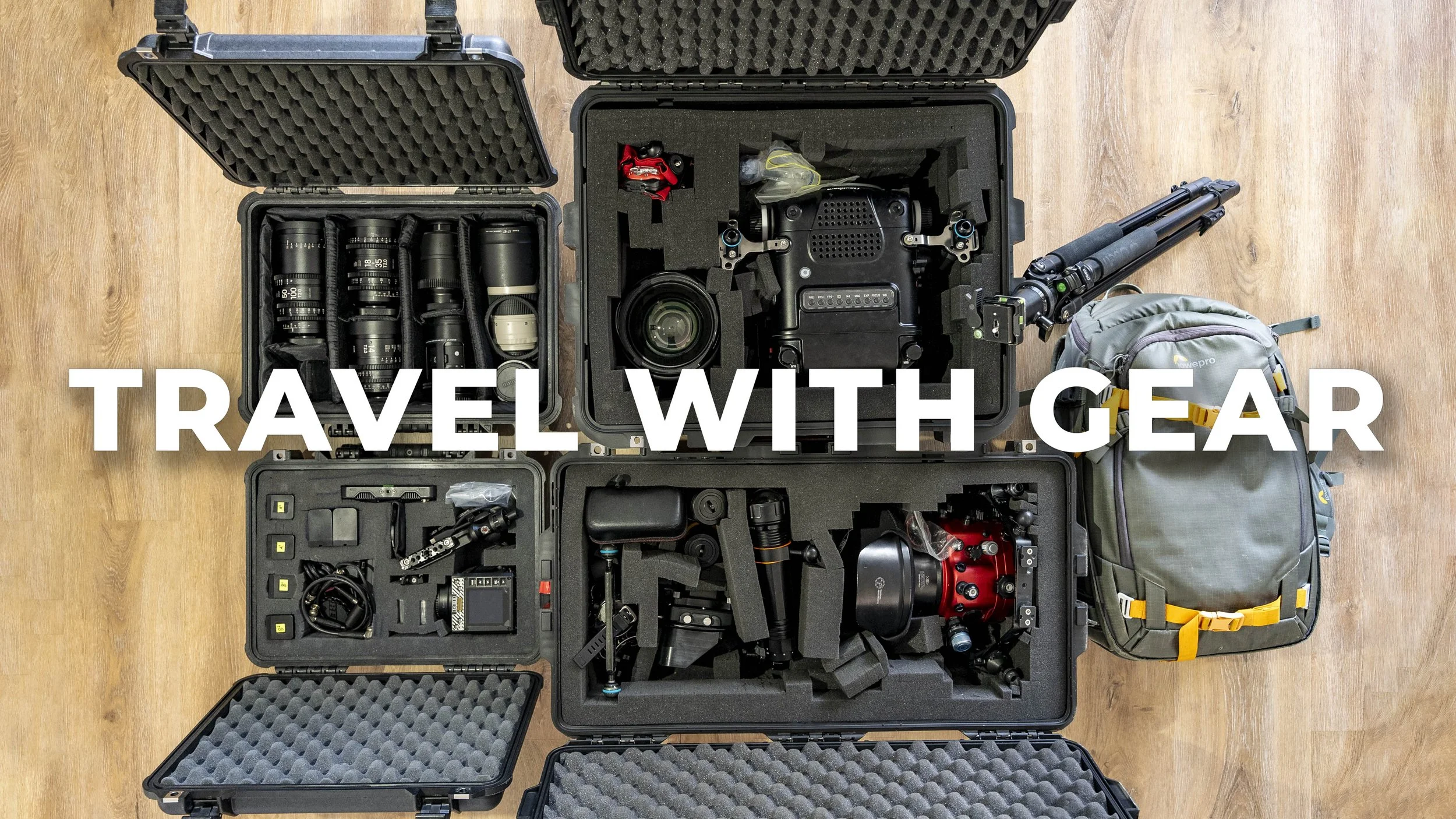
Gear acquisition syndrome is a fun past time for any filmmaker, but when it comes time to travel and actually take all our film equipment somewhere exciting for a job, it’s probably something we immediately regret. One of my go to bits of advice for filmmakers looking to travel with their equipment is to get yourself a packmule/ girlfriend or boyfriend who can carry half your equipment for you. But practically speaking for working DP’s you can’t bring them to work with you anyways, so there’s not really any point to getting yourself a partner, so how do you travel with all your kit?

This Mistake Nearly Cost Me a $20,000 Film Job
As filmmakers and cinematographers at some point throughout our career we’ve all no doubt encountered a situation that could have completely ruined a shoot and lost us an important client. It’s unfortunately one of those things you likely have to experience and overcome to learn from. But trust me, don’t do that, learn right now from my mistake.
I Bought a Set of Cinema Lenses, Was it Worth it?
The allure of cinema lenses is undeniable. The promise of superior image quality, precise optics, and creative possibilities beckons filmmakers into this fascinating world. But the big question looms - are they worth the price tag?
Cine Prime vs Cine Zooms For Documentary Work
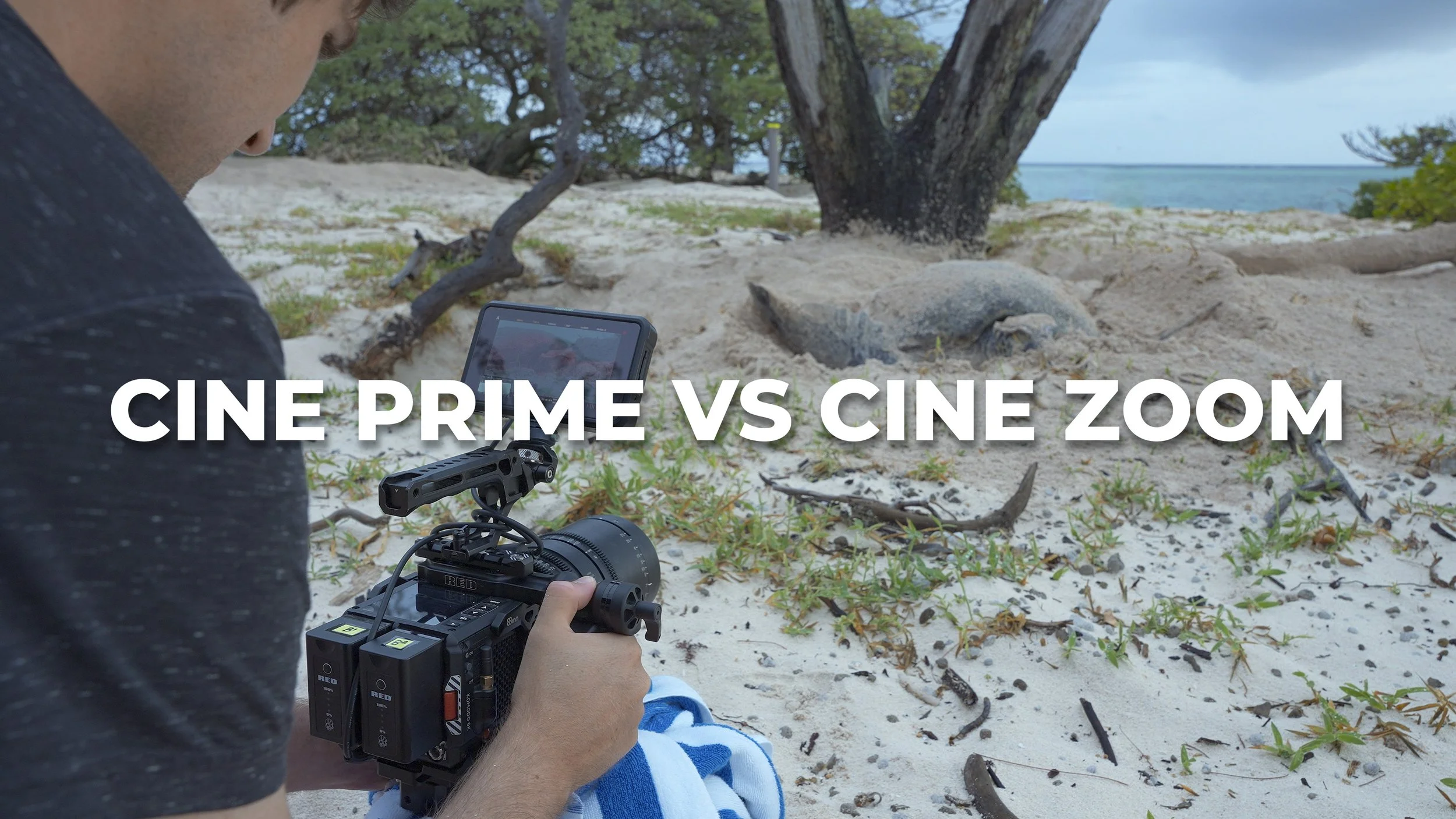
The zoom vs prime lens debate is as old as filmmaking itself, but when we start to consider cinema glass the differences between cine zooms and cine primes are magnified. Today we’re talking about the age-old debate of cine zoom lenses versus cine prime lenses and particularly how they impact wildlife and documentary cinematography.
Why I Love Underwater Cinematography
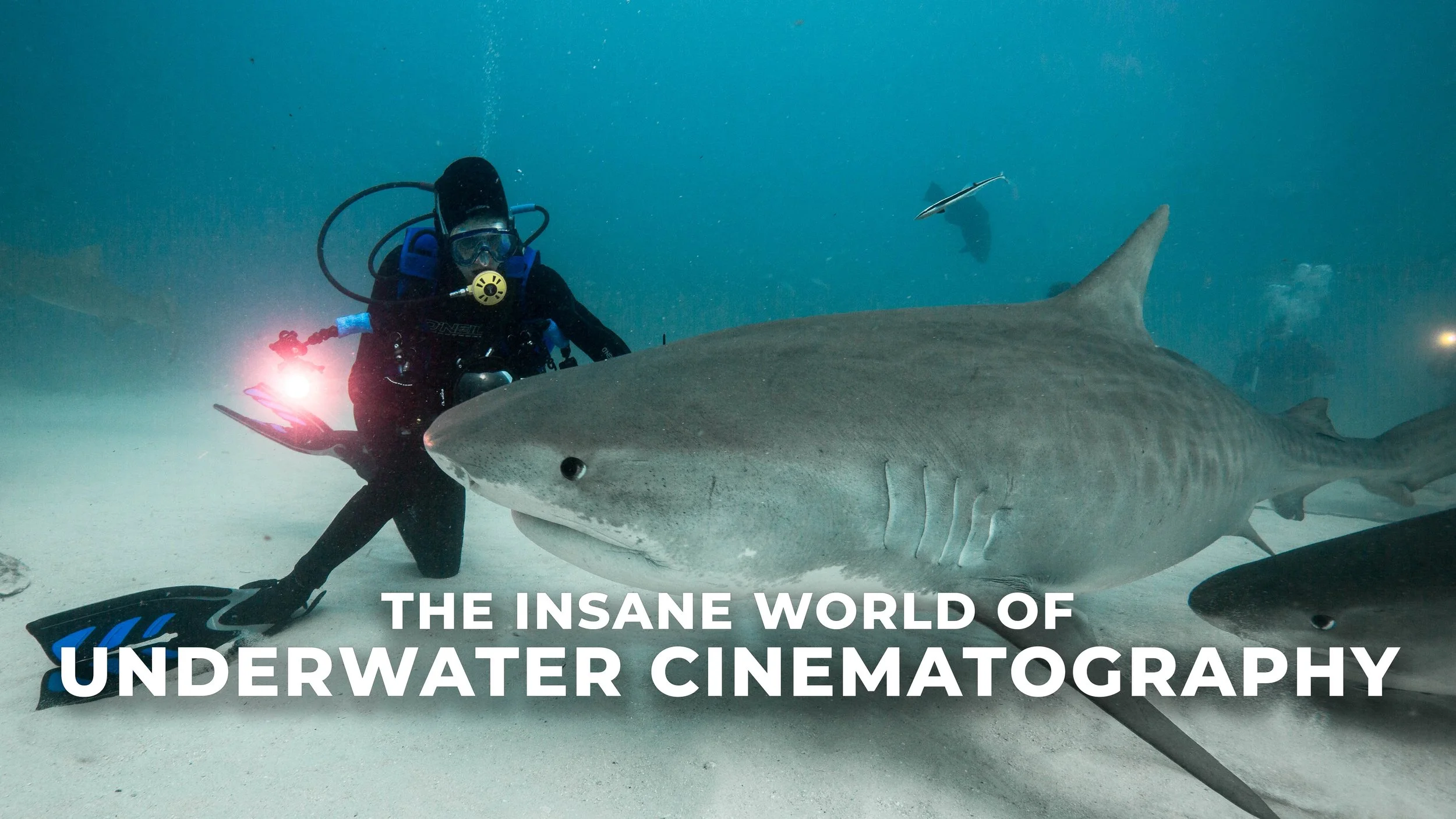
In the world of wildlife filmmaking there’s really nothing that compares to underwater cinematography. Wildlife filmmaking is dominated by telephoto lenses with most cinematographers relying on the Canon 50-1000mm lens, a technological feat that allows cinematographers to capture wildlife footage from the safety of a few hundred meters away.
For underwater shooters, this is like a cheat code. Underwater, we often can’t capture good quality footage if we’re any more than 3 or 4 meters away. Putting this in perspective, if we were on a documentary and were looking to film lions hunting, we would have to be standing right next to them as they prowled through the jungle looking for food, not from the safety of a car 200 meters away. We have to not only be in the action, we often find ourselves as part of it. And this is what makes underwater cinematography so epic.