
I Bought a Set of Cinema Lenses, Was it Worth it?
So a little while ago I spent the equivalent of about a years worth of rent on these manual focus Sigma Cinema lenses, which I actually already owned the much cheaper $800 f1.8 photo version of the same lenses. And you’re probably thinking why on earth would you do that.
Fair question.
The allure of cinema lenses is undeniable. The promise of superior image quality, precise optics, and creative possibilities beckons filmmakers into this fascinating world. But the big question looms - are they worth the price tag?
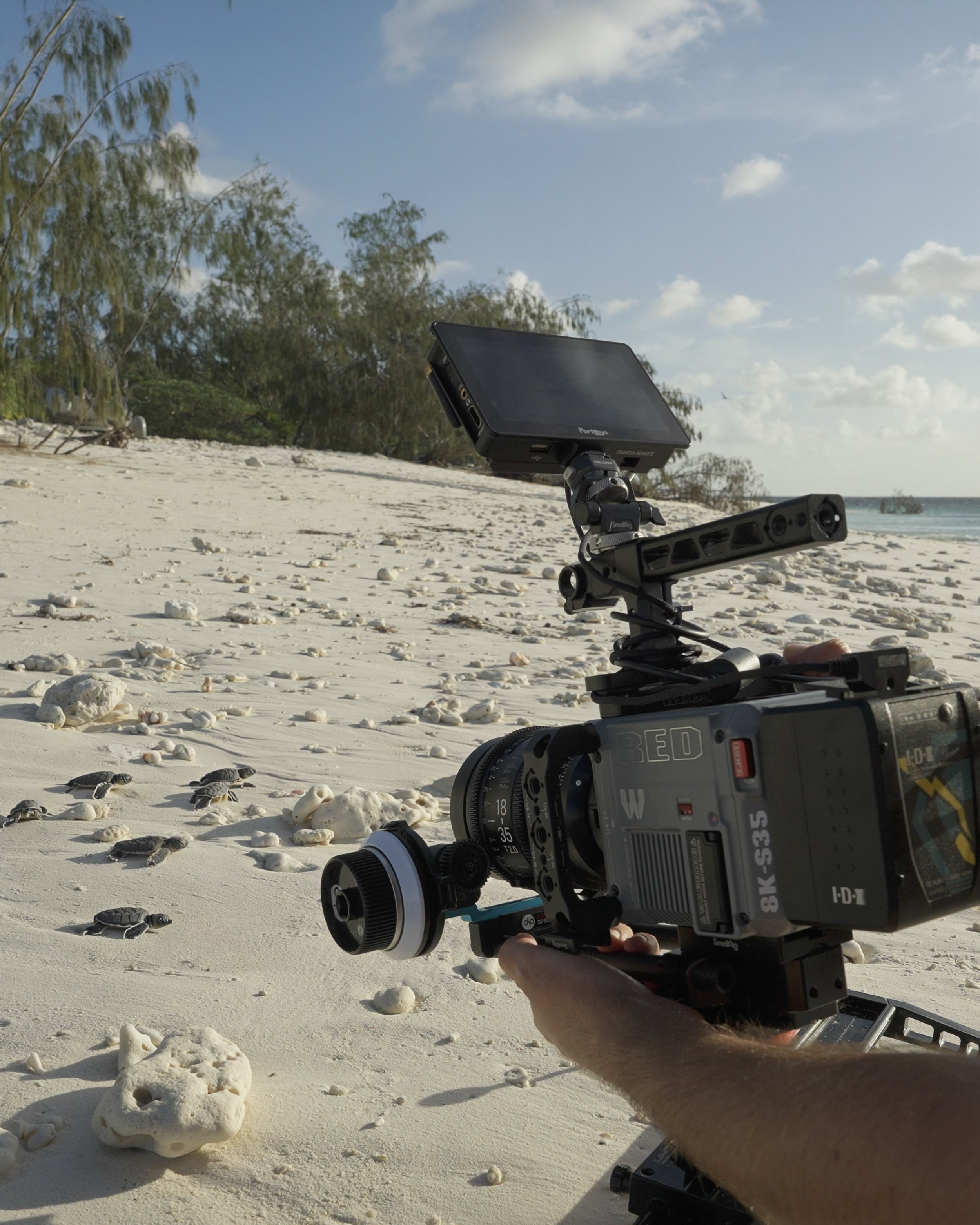
Now I already owned the Sigma 18-35 f1.8 photo lens which retails for about $800 Australian dollars, and shown on my rig here is almost the exact same lens, the Sigma 18-35 T2 Cinema Lens, which retails for $7,300, a very steep price difference. Most people commonly assume the difference must be in the optical quality, but while the cine lens is slightly improved with more advanced optical coatings, they are more or less optically the same. The cinema lens is also manual focus only where the f1.8 version caters to manual and autofocus, and the cinema lens is also almost double the weight, so the question again looms, why?
In the world of cinematography where film crews and camera operators rely on manual focus almost exclusively, cinema lenses among a few other features that I will touch on below, offer 1 critical advantage over photo lenses, and that is their precise and smooth manual focus control. If you have ever tried to manually focus on standard photo lenses, you will realise just how imprecise it can be. The focus throws on standard photo lenses are so short that it becomes very difficult to accurately dial in your focus and follow your subject, as even the slightest move in focus will shift your focus plain quite dramatically. This makes things like focus pulling almost impossible at times.
This is made even worse by the fact that focus pulling on photo lenses is usually non-linear, meaning that pulling focus isn’t only dictated by the amount the focus ring is rotated, but it’s also influenced by the rotational speed of the focus ring, adding another vague variable into the mix making pulling focus manually very difficult.
This is all amplified by the fact that today we are shooting almost all our footage at least at 4K, and in natural history projects for me, either in 6K or 8K, and with these higher resolutions, even the slightest imperfection in focus is immediately obvious.
Cinema lenses resolve this issue, and are designed for precise and smooth manual focus control, where these sigma cine lenses have a 180degree focus throw, with clear linear focus markers and guides printed over the lens. These much expanded, linear operating focus throws are so nice to work with, and allow you to accurately dial in focus, and follow your subject with confidence. Using photo lenses I was always conscious and worried that with the slightest 1 to 2mm turn of the ring that I would completely overshoot my focus point and ruin my shot, with these lenses, those tiny rotations of the ring clearly and simply shift focus a small amount allowing you to accurately pull focus throughout a scene.
For me this reason alone was why I bought these cinema lenses. If you’re a working DP you know that one of the worst things to worry about is missing focus in an all important moment, and fighting those tiny non linear focus throws on photo lenses is not a fun experience. But these lenses, as do all cinema lenses also have a number of other benefits.
The lenses are parfocal, which means that when you zoom in and out your focus point remains constant making it much easier to get a range of wide medium and tight shots of the same scene without loosing focus, something photo lenses just can’t do.
In addition to this, the aperture ring or iris works very similarly and allows for manual smooth exposure changes throughout a scene, without the jarring hard stop changes in exposure that you see when changing aperture on photo lenses. You would have noticed that these lenses are also T2 instead of f1.8. And while this is pretty much the same thing, the light or iris is measured in T stops, or light transmission, which is a more accurate measurement of light that will perfectly align exposures between different lenses. Conversely photo lenses at f1.8 will all have slight shifts in exposure between them meaning exposure will shift while changing lenses even if the f stop is the same. Now I don’t particularly care about this and this applies more to a set environment, but it’s nice to have.
Something I do care about though is the way in which Cinema lenses are built, and namely that they are all built with identical focus, zoom and aperture ring placement. Meaning that when you change lenses on your rig it’s much simpler, as all your focus gears and follow focus systems are already perfectly aligned, and you don’t need to re-rig up your camera every time you change lenses. This saves a lot of time when changing lenses, and allows you change lenses in the heat of the moment much easier.
Coming in at around 1.5 kilos each, these lenses are made up entirely of metal and glass, and are built for durability.
Another major reason film crews shoot on cinema lenses is that they often have a look associated with them. DPs and cinematographers will choose lenses that emit a certain look and feel to their image, and they use lens choice much the same way as the editors grade the footage, as this look and feel will bring out a different response or subconscious feeling in the audience.
For me personally, this wasn’t as big of a consideration and working in wildlife and documentary filmmaking I chose the Sigma lenses as they are renowned for their natural and life like image, and their extremely sharp optics. I want my footage to look and feel how it does when I’m in the field capturing it, and I didn’t want to add in Hollywood looks associated with a number of other cinema lenses. But depending on what you are capturing, this may be a much bigger influence in deciding to pick up a set of cinema lenses.
So the question remains, are these lenses worth their hefty price tag?
This is very much a personal question, as for most videographers using autofocus systems and lenses, the answer is probably not. For me, as a working DP using cinema cameras that rely on manual focus systems, having confidence that my footage is in focus and being able to accurately pull focus and follow my subject is critical and more than justifies my decision to pick up a set of these cinema lenses. All the additional benefits are nice, but for me this is without a doubt the most important factor, and the reason I invested in cinema glass.
As I use these lenses more and more, the additional benefits like the smooth iris control and the way the lenses are built to allow for fast lens swaps has definitely gown on me, and become something I do really appreciate having as well, and do miss when using other systems.
If you’re a working DP, and are working in manual focus environments on cinema cameras, I would suggest looking into cinema lenses as they will dramatically improve your cinematography. But whether the price tag justifies the benefits for you will depend on what youre shooting, and your personal circumstances.