
Filming Ocean with David Attenborough
A career defining honour and a hopeful story from the Great Barrier Reef
By Tom Park, Australian Underwater Cinematographer
Earlier this year, I had the incredible opportunity to contribute to Ocean with David Attenborough. As an underwater cinematographer, it was a huge honour to be a part of the film. Sir David Attenborough has inspired generations of wildlife filmmakers, and to get the call to contribute to one of his films is the highlight of my professional career. A true career milestone.

My work for Ocean focused on the Great Barrier Reef, specifically around the 2024 global mass coral bleaching event. At the time the bleaching hit, I had already spent nearly 300 days filming this one particular section of reef for another natural history film I have been working on, a vibrant, bustling ecosystem. Almost overnight, I watched this incredible ecosystem transform into a stark, white landscape void of all life and colour. It was devastating.
But I knew it would eventually recover. So I made the decision to stay and keep filming. I documented not just the collapse of the reef, but also the hope that followed. When I connected with the Silverback and David Attenborough team, particularly directors Toby Nowlan and Keith Scholey in the UK, they were looking to tell this same story and expressed a keen interest in my continuing documentation of the Great Barrier Reef’s recovery.
Following this, I returned to Australia and I spent the next 14 months continuing to film the reef as it bounced back, and documenting this journey of recovery. And not only did large sections of the reef simply bounce back. But in the sections that weren’t so lucky and did fall to rubble, only a few months later we started to see these little signs of life sprouting up from the rubble. As David Attenborough so poetically puts it, these baby corals were forming the base of a new reef. And today, 14 months after this event, these baby corals have grown to the size of small dinner plates and by all accounts are a brand new reef.
The story shown on screen goes a long way to show just how resilient the reef can be, and that if we buy our oceans time they can bounce back.


Representing the film on home soil
As if working on and contributing to Ocean with David Attenborough wasn’t enough, I was also lucky enough to travel with the Ocean film premiere around Australia, speaking on behalf of the film and my cinematography in Ocean through Q&A sessions at the Australian premiere, and at premiere events in Perth, Melbourne, and Sydney, organised by the Minderoo Foundation and Pew Charitable Trusts. During these sessions, alongside panellists including Valerie Taylor, leading ocean scientists and NGO’s, and individuals such as Sea Shepherd Managing Director Jeff Hansen, we were able to engage with the audience, to discuss all things from cinematography in Ocean and how the team captured some of the incredible footage and sequences shown on screen, to environmental discussions surrounding the UNOC Ocean Conference and the High Seas Treaty, and the health of our reef and oceans.
Alongside the screenings, I was part of a national media and PR circuit discussing the film, my involvement in Ocean with David Attenborough as an underwater cinematographer, and the key environmental messages at the heart of it. I did live TV, radio, and print interviews with outlets including:
Sunrise Channel 7 with Matt Shirvington and Natalie Barr; Channel 10 News with Ali Donaldson, Sydney Morning Herald, Daily Telegraph, ABC Perth Radio, Hope FM, The West Australian, Seven West Media, Peter Barr and Radio Great Southern WA, Radio 2SM with Ron Wilson, Radio 5AA Adelaide with David and Will, Minderoo Foundation outreach, and more.
It was a really surreal experience to be part of the national conversation in such a big way, especially on something that’s so personal to me, and to be able to talk on behalf of David Attenborough’s latest film, a man who is a long time icon of mine, and true king of our natural world.

Daily Telegraph Interview with Australian Underwater Cinematographer Tom Park on Ocean With David Attenborough
Why the ocean matters more than ever
One of the key themes of Ocean is that we need to stop seeing the sea as something separate, some far away distant world. The ocean is part of our shared home, and it’s critical to the planet’s health. I truly believe that one of the most powerful societal shifts we need is to stop viewing the ocean as an endless resource or a dumping ground. It’s unfortunately out of sight and out of mind for many of us, and as it is more difficult to see what’s going on beneath the surface, decisions are often made that impact our oceans that those implementing policy aren’t aware of. We see short term economic positives when we loosen restrictions and allow bottom trawling for instance on the Great Barrier Reef, which unfortunately is where 50% of all bottom trawling in Queensland occurs, on the Great Barrier Reef legally inside marine protected areas, or when we permit industrial activity, fishing or otherwise in migration paths or near critical breeding grounds, we see short term economic benefits. But we more often than not fail to see the consequence of these actions, as this is a world literally hidden underwater and it remains largely unseen.
Instead, we need to start seeing the ocean as a living system that sustains us, and one that’s deeply vulnerable to our actions. It’s not an endless resource that can keep up with our overexploitation.
We've made transformative changes before, like banning whaling. The film discusses blue whales, but even in our own backyard, our humpback whale populations off the east Australian coast dropped as low as around 200 whales in the 60’s due to a very extractive whaling industry, but due to protections, this number has bounced back to an estimated 40,000. This change occurred because people felt something, and that’s where storytelling comes in. It’s not just about data or policy. It’s about winning hearts. We need people to understand what’s at stake, and a large part of my drive in working as an underwater cinematographer is to show off our underwater assets and it’s beauty, offer hope and hopefully create a bit of empathy towards this beautiful, lesser known world. When you show people the beauty, intelligence, and fragility of marine life, you create empathy. And empathy leads to action, whether that’s pushing for marine protected areas or implementing sustainable fishing practices. David Attenborough said it himself “No one will protect what they don't care about; and no one will care about what they have never experienced”.
Our goal as storytellers is to create that emotional connection, to make people care as much about what happens under the surface as they do about what happens on land. Because only then will the societal shifts we need become possible.
Hope for the future
Despite the challenges, I’m hopeful not just for the Great Barrier Reef, but our oceans as a whole. The science is clear, and I’ve seen it first hand. If we buy the oceans time, they will recover and they will bounce back. Right now we have the unique opportunity, with the High Seas Treaty is sitting with the UN. This is a once in a generation chance to protect our ocean, and give us a fighting chance in the climate crisis. Australia has signed on, but we haven’t ratified it yet. That needs to happen.
There is a lot of hope, and if we do the right thing, and protect our waters, protect our reef, they will bounce back. Our marine protected areas should be protected.
A note on Attenborough
To have worked on a David Attenborough film is the highlight of my professional career. To hear his voice narrating my cinematography, it still feels a bit surreal.
It is just remarkable that he is still producing films of this calibre at the age of 99. It’s unbelievably inspiring, and I don’t know if he’ll ever stop making films. I hope there are more. He has made such a monumental mark on this world, and has been a figurehead for our natural world. And truly, not only do I hope to work with him and his team again, but I’d be absolutely honoured to buy him a beer.
Tom’s contribution to ‘OCEAN WITH DAVID ATTENBOROUGH’
Tom contributed footage of the following to the film
Vibrant footage of The Great Barrier Reef
Evidence of bleaching in the reef, following the 2024 Global Mass Bleaching Event
Recovery shots of vibrant reef footage including baby corals and sprouts of life among the rubble
Aerial footage of The Great Barrier Reef captured by drone, including the digital cover of the film
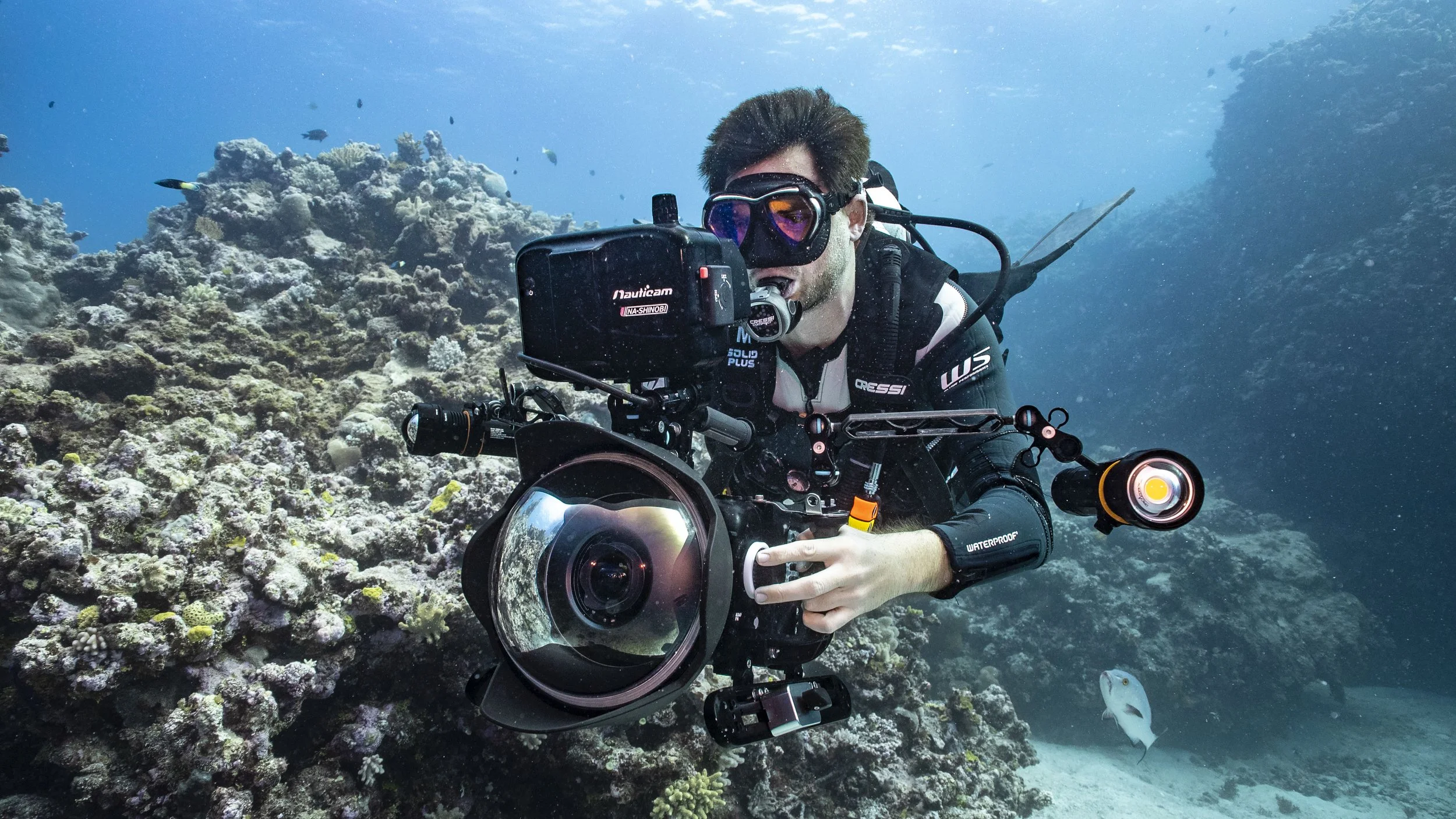
Behind The Scenes Ocean With David Attenborough, Australian Underwater Cinematographer Tom Park shooting on the RED V-Raptor 8K
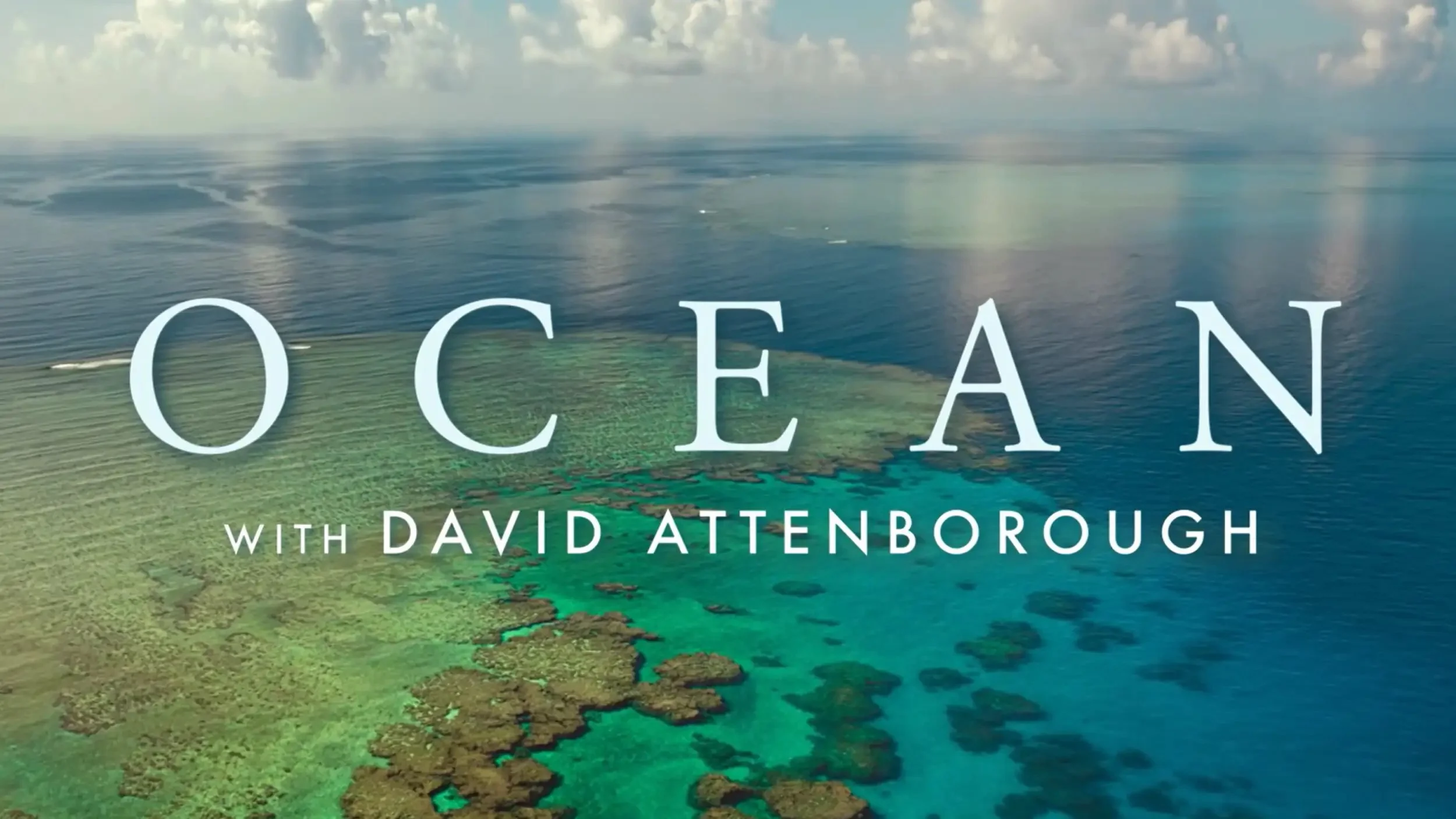
Ocean Digital Hero/Poster - Shot by Tom Park Australian Underwater Cinematographer
About Australian Underwater Cinematographer Tom Park
Tom Park, 30, is an accomplished underwater cinematographer and director from Australia, with over a decade of experience working in the underwater film industry. Tom has worked on a variety of projects, from feature documentaries and natural history films for clients including BBC, Netflix and David Attenborough, and his work has been recognised with awards from film festivals around the world, including the prestigious Wildscreen Festival.
Tom is known for his technical expertise in working with underwater cameras and equipment, as well as his creative vision in capturing the beauty and uniqueness of the underwater world. He is passionate about ocean conservation and using his art to raise awareness about the importance of protecting marine ecosystems
Tom has spent much of his career filming The Great Barrier Reef and the East Coast of Australia. Through his work, he has had the unique opportunity to document these fragile ecosystems as they evolve and change in response to environmental pressures.
One significant change he recently documented occurred while filming his own natural history feature film, Circle of Life. During production, he was uniquely positioned to capture the reef as the 2024 Mass Global Bleaching event unfolded. Documenting the Reef's initial response to the bleaching event led to him working with the Silverback Films team to capture and follow the Southern Great Barrier Reef's recovery over the next 14 months. The remarkable bounce-back of the Reef, captured in key sequences, highlights its resilience and delivers an important message of hope.
Filming on the RED Digital Cinema V-Raptor 8K.