
How to Travel With Gear as a Filmmaker
Gear acquisition syndrome is a fun past time for any filmmaker, but when it comes time to travel and actually take all our film equipment somewhere exciting for a job, it’s probably something we immediately regret. One of my go to bits of advice for filmmakers looking to travel with their equipment is to get yourself a packmule/girlfriend or boyfriend who can carry half your equipment for you. But practically speaking for working DP’s you can’t bring them to work with you anyways, so there’s not really any point to getting yourself a partner, so how do you travel with all your kit?
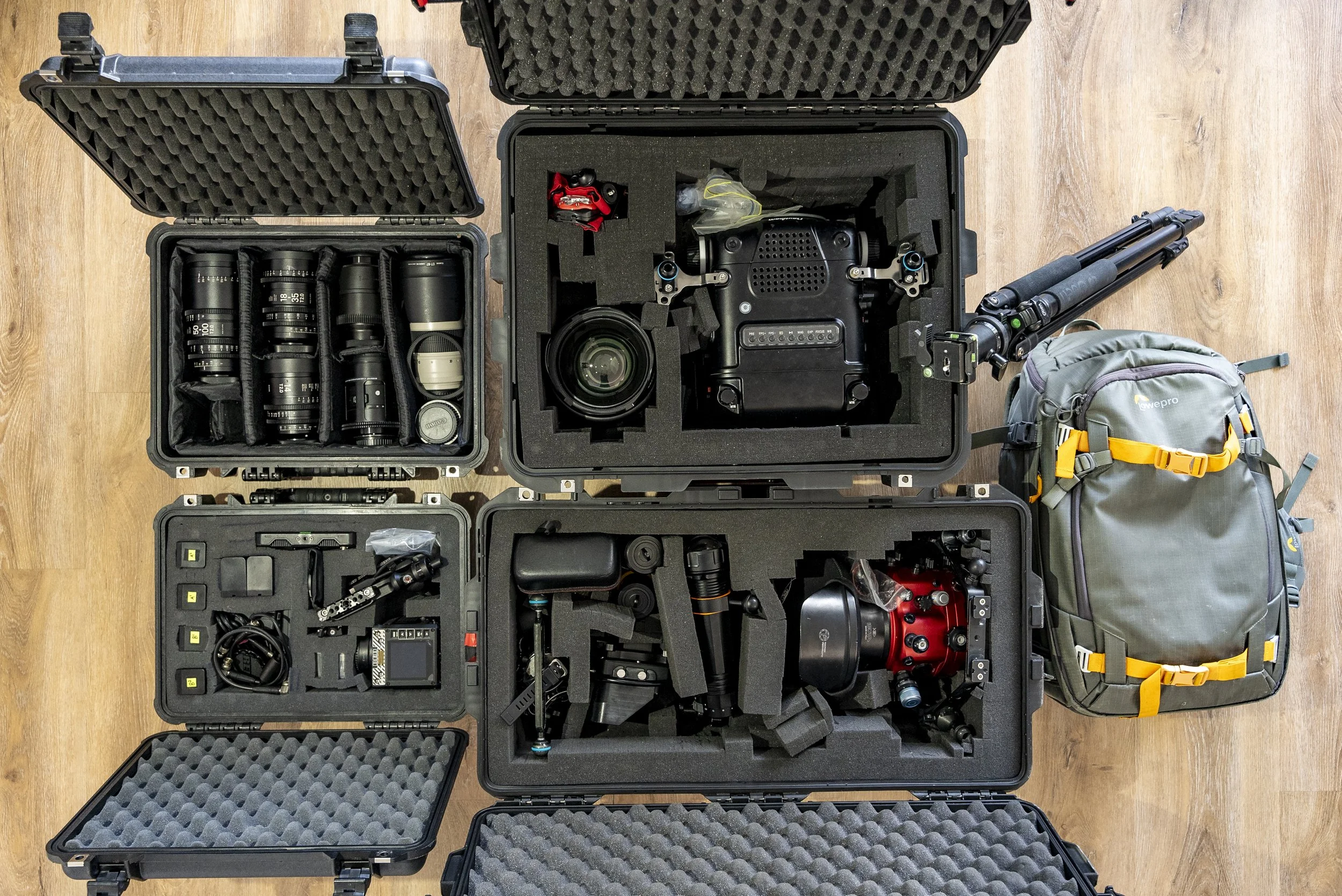
Whether you're a wildlife cinematographer, a documentary filmmaker, or just someone passionate about telling stories through a lens, knowing how to move your equipment safely and efficiently is a skill you've got to master.
One of the most important things to do before you even pack your bags, is to plan ahead for your destination. This includes everything from researching what the drone laws are, understanding the rules on how many camera bodies are allowed into the country, and if there are rules on what the maximum value of camera equipment brought into the country is.
These are all things that are critical to get right, as I have been on countless shoots as both an AC or second shooter where one of the crew wasn’t aware that he or she wasn’t allowed to bring a drone into the country, or that they weren’t allowed to bring in any more than 2 camera bodies, and airport security simply just confiscated the equipment. I’ve seen this happen more than once, and in my experience the success rate for the filmmaker to get their gear back is only around 50%. It’s not a great way to start a shoot.
Also if you’re travelling with something like a RED RAPTOR like I am, you’ll have a bit of work ahead of you in organising carnets and other things to ensure that customs let you pass with your equipment, and let you pass without levying thousands of dollars in import taxes on you. If your kit is as big as mine, it will attract attention from customs officers who will be asking you what you’re doing and if you have a carnet. Don’t get caught out, as it will costs you thousands, and can potentially ruin your shoot.
Now that you know what you’re allowed to bring, packing is an artform. I usually travel with 4 items or bags. The first is a good quality camera bag, one that is large enough to fit all my equipment on location, but not big enough to not be allowed as carry on. Then I travel with 2 pelican Air travel cases, and I’ll touch more on those later on. My fourth item, is a ski jacket. No matter how tropical the destination im travelling to is, I will always bring a ski jacket, as these guys have pockets big enough to fit in a few kilos of gear without raising any eyebrows. This may sound like a joke, but finding one with deep pockets is critical, as I can fit drones, underwater video lights, and even cinema lenses in my ski jacket. Trust me, when flying with 60KG of camera equipment, we need to leverage any small advantage we can.
Another little trick of mine is that Where possible, I always try to travel with a full underwater camera system in my carry on, and try to keep anything critical I need for a job with me in the unlikely event that my check in hard cases don’t turn up. This was much easier when travelling with my Sony system than the RED of course, as I would take a stripped down housing, camera and lens with me inside my camera bag on the plane such that I could always make a shoot work even if the rest of my equipment failed to turn up. With the RED of course, this is much harder, but I still try to take my Sony camera as a back up in carry on. Not that I have ever had any issues with luggage failing to arrive, but I’d rather be prepared.
When it comes to bags and cases, while large camera bags and pelican hard cases are expensive, I would say that these items are essential to ensuring that your gear arrives at your location safely. I see a lot of posts online with people asking how to safely travel with their underwater camera, or lenses just in their suitcase wrapped up in clothing or towels. And While I have been there, and do understand, I urge you not to do this, and to travel with appropriate protection for your gear. Even if that means buying a smaller cheaper hard case to put your gear in, and putting that hard case inside your suitcase, it’s still much better than wrapping your expensive lenses and underwater equipment in clothing and hoping for the best.
As an underwater cinematographer, we travel with a lot of large equipment, and have things like 9” domes and massive underwater housings that we need to travel with. For this reason I like all of my camera bags and hard cases to be extremely deep, such that they can fit my housings and domes in them without taking up too much horizontal space. As mentioned, In a pinch I can fit a rigged up underwater camera inside both my hard case and my camera bag, which really helps when luggage allowances are slim.
When it comes to hard cases, I really like the Pelican Air series of cases. They are extremely durable, have lifetime warranties, and they’re built for flying around, such that they’re measured to airplane specs and are lighter than other cases. They cost as much as a lens, but once you have them they’ll be with you for life. I also really recommend spending extra on the cases with moveable inserts, and avoiding if possible hard cases that use rippable foam, as it wont take too long for the foam partitions inside your travel case to be completely destroyed. Again it costs more, but long term the moveable trekpack or Velcro dividers are a much better choice. And as your gear inevitably grows, or the gear requirements for this particular job change, you can adjust your hard case to the new size.
Finally, when travelling with camera equipment, it’s incredibly important to insure your kit. Personally I have an insurance policy over all my camera equipment that covers me in the event that my hard cases are lost, and even in the event that my camera is damaged or floods while being used. With expensive equipment, the piece of mind that you’re covered even if the worst happens is such an asset. Also for $40 throwing a few airtags in your travel cases is well worth it.
Travelling with gear is such a pain, but with proper planning, the right travel cases, insurance, and a few cheeky tricks, it can remove a lot of the stress. But even still, getting camera equipment on a plane is never fun.