
Finding Your Filmmaking Sub Niche
As a filmmaker, there are a seemingly countless creative avenues to explore. With so many different styles and different worlds of filmmaking, it’s impossible to be able to master them all. But as most of us start out our videography journey, due to practicality reasons we immediately fall into a one-man band type production, you know, we are the director, the topside videographer, the drone pilot, the gimbal operator, the sound recordist, the underwater videographer, the FPV pilot, the editor, the photographer, and the colourist.
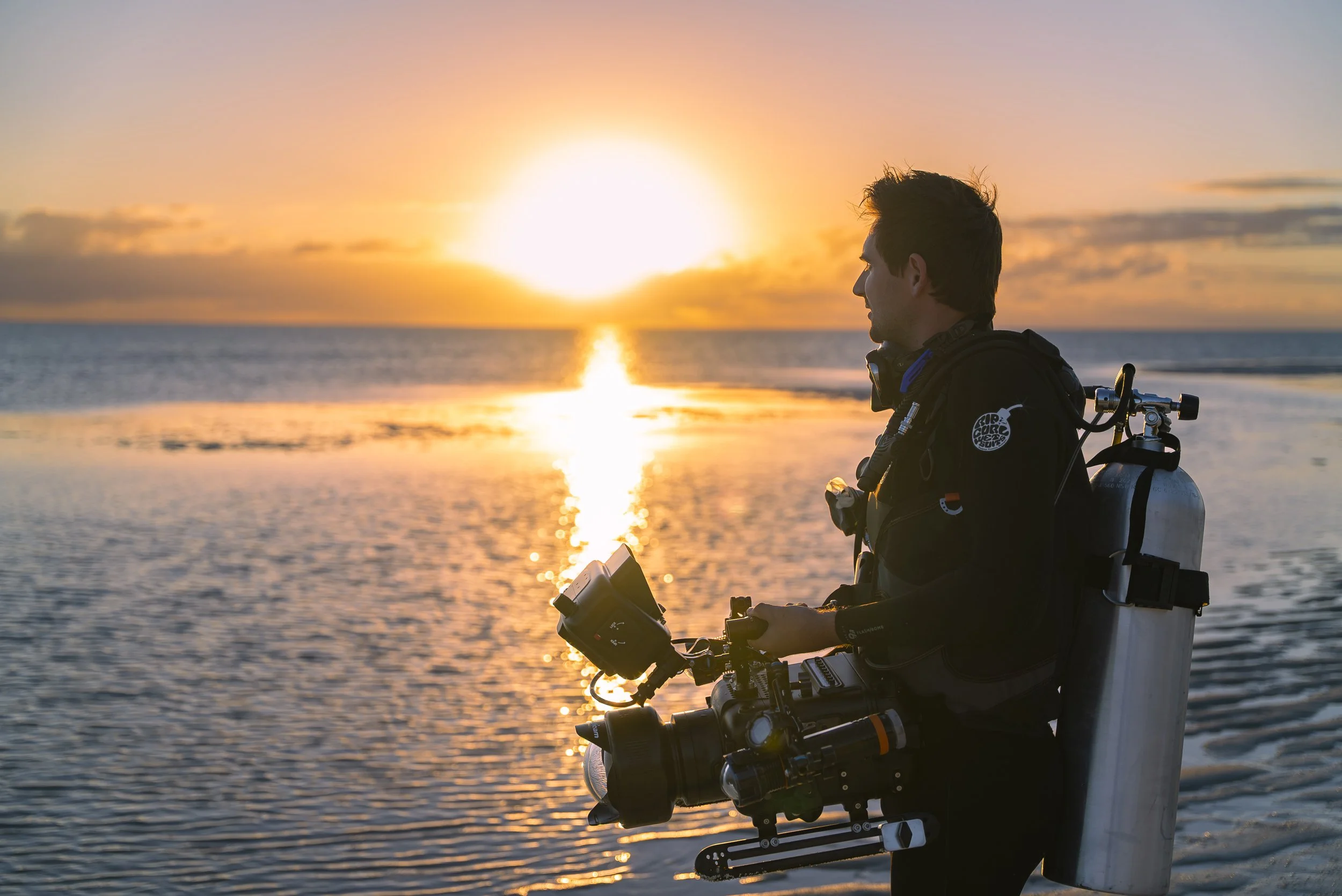
With so many hats to wear videographers starting out inevitably spread themselves so thin, that they fall into the jack of all trades, master of none category. This is by no means a bad thing, and it does provide a really good understanding of how the entire process works, and I’d argue that starting here is actually beneficial in the long run, but should you wish to move onto bigger and better productions this is something that almost all of us have had to deal with at one point or another.
The 'Jack of All Trades approach is a common place for beginner videographers to find themselves in. As videographers starting out are usually producing content with restricted budgets, and for smaller clients its often impossible to build out a large team of specialised professionals to complete a film job. With these reduced resources it becomes increasingly important for the ideal creator to be able to provide all of the services themselves, as a one man band.
Typically, clients in these situations prioritize capturing a diverse range of content quickly, even if it means compromising slightly on quality, rather than dedicating all available time to perfecting just a few elements of the shoot. This approach makes perfect sense for small to medium businesses, as they must make the most of their finite resources, necessitating a wide spectrum of content from each marketing shoot.
But these broad deliverables force many creators into becoming a jack of all trades, where they’re expected to not only shoot topside content, but to also be the drone pilot, underwater shooter, interview shooter, social media producer, photographer, sound recordist, editor and so on.
While my filmmaking origin was always underwater focused, like many of you, to make my commercial projects viable I often wore many hats, and I truly believe it's an excellent way to start. It offers invaluable insights into every aspect of filmmaking. This understanding becomes a valuable asset as you progress in your career, whether you're working within a specialized team or taking on diverse roles in different departments. Being able to step in and to do things like pick up a drone in a pinch and capture a quick moment for a documentary, even though your role may be completely different is a massive asset.
There are many different definitions of what makes someone a videographer a filmmaker, or a cinematographer, but from where I sit, videographers tend to be the jack of all trades style shooters. They run video production for clients who need a wide array of content, and they wear multiple hats to produce and satisfy that goal. It’s fairly common for videographers to start to plateau after a few years. As we are always chasing bigger and better projects, eventually we reach a point where the only way up to specialise in one area of filmmaking, such that we can form part of a larger team, and thus in my mind, you become a filmmaker, or without diving into specifics, a cinematographer or DP.
This doesn’t have to happen all at once, but specialising in one area of filmmaking reaps many benefits. The most important personally is that Specializing in a niche that you're passionate about can lead to more meaningful work. When you love what you do, it shows in the final product, and overall provides much higher job satisfaction. Specialization also allows you to become an expert in your chosen field, which can make you highly sought after by clients who want top-tier results, which again tying back into the above point, will hopefully lead to more exciting projects.
Specialisation opens doors into the larger world of production, enabling you to work with teams of specialists from other areas and departments to capture and produce much more meaningful work, with bigger clients, on films, documentaries or commercials with a much grander scale, something almost all creative seeks.
So how do you find your filmmaking sub niche?
For many of you this should be fairly simple. Your ideal sub niche is the area of filmmaking that you love the most. If you’re a storyteller, it’s likely in the world of documentary, if it’s marine life then its as an underwater filmmaker, and so on. This speciality is likely also an area that you have the most experience in and the most technical knowledge, as it’s the area in which you are the most passionate.
Whatever niche you choose, it’s important to have a range of footage to build out your showreels, this is all likely content you have from previous client work or personal films, but ensure that you align yourself in an area in which you have ample experience, footage, and probably more importantly, connections in.
In the world of film and documentary cinema it’s all about who you know, and your network is everything. Use your specialty to align yourself with like minded filmmakers, to develop your skills and connections.
If you’re looking to move from being a videographer with many hats to a well regarded specialist, I would suggest to Start by being well-rounded and mastering a few core skills, while keeping an eye on the opportunities in your sub-niche. Consider transitioning into your sub-niche gradually. This gives you time to build expertise while maintaining your flexibility, and will help you keep consistent work as you step into your new role.