
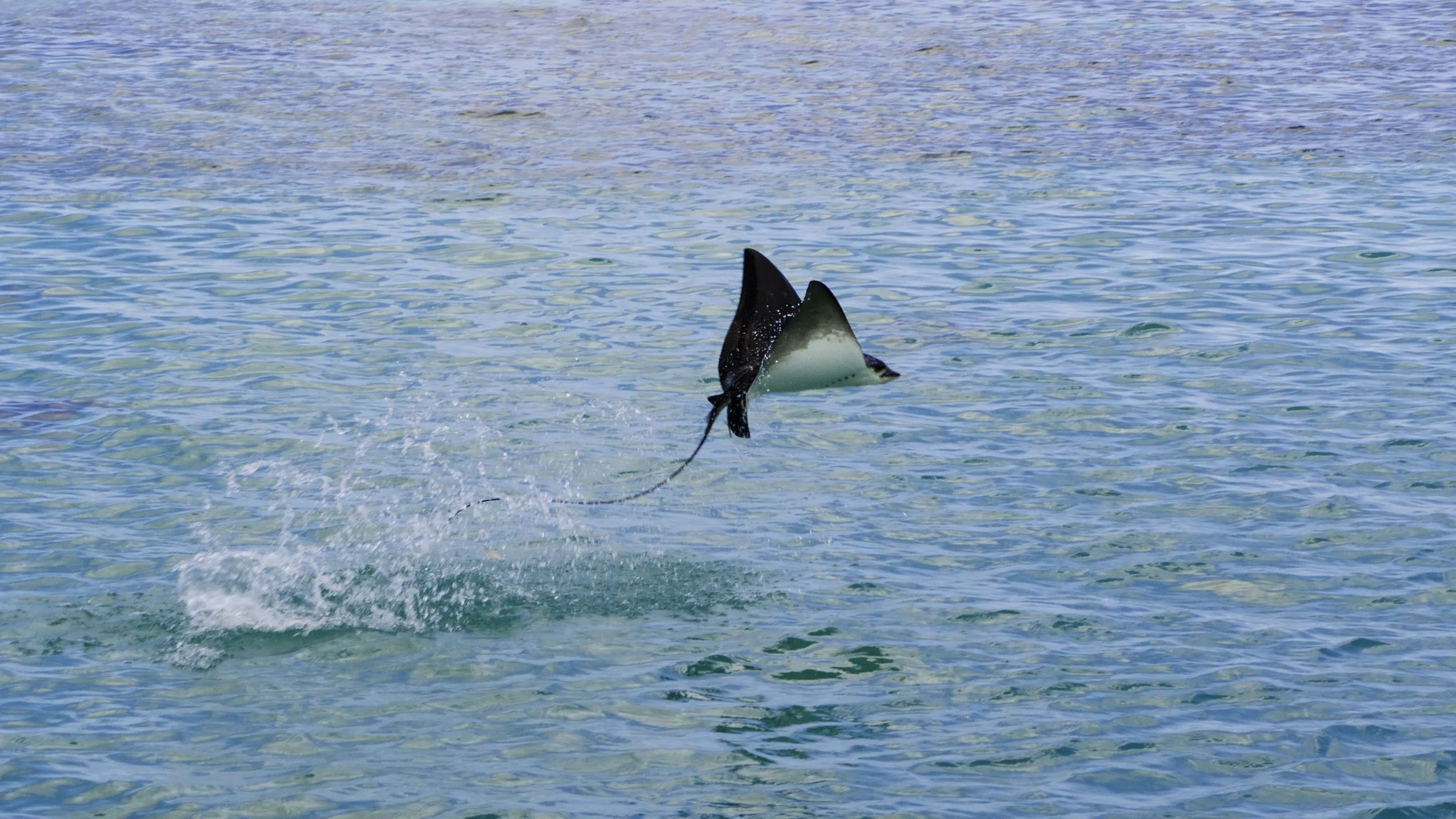
Filming Eagle Rays Breaching in 6K Ultra Slow Motion – Great Barrier Reef
The Filming Method: All sequences were filmed on the RED V-RAPTOR, locked off on a sturdy tripod with telephoto lenses.
Long lenses are essential. They compress distance, isolate the subject against the horizon, and allow space between camera and animal. At those focal lengths, even minor movement becomes exaggerated, so a solid tripod setup is critical.
Everything was shot in 6K at 180 frames per second.
At standard frame rates the breach feels abrupt. At 180fps ultra slow motion, you see the full wing extension, the body flex, the water displacement and the re-entry. It gives natural history productions the ability to study motion properly while retaining broadcast quality resolution.
Manual focus was also key. Autofocus will hunt at long focal lengths, especially over reflective water. Pre focusing on a set distance and making subtle manual adjustments based on surface activity keeps the frame clean and stable when the breach happens.
The RED’s pre record function made a real difference as well. With unpredictable behaviour like this, you often react a fraction late. Pre record buffers several seconds before you hit the trigger, which means you capture the full take off rather than just the tail end.
Those tools matter when the entire event lasts less than a second.
Time and Positioning
Like most wildlife behaviour, this isn’t luck.
It’s repetition and positioning. Long sessions scanning the surface. Reading current lines. Watching where rays are feeding. Adjusting framing constantly to anticipate direction rather than react to it.
You don’t chase breaches. You prepare for them.
When it lines up, it happens fast.
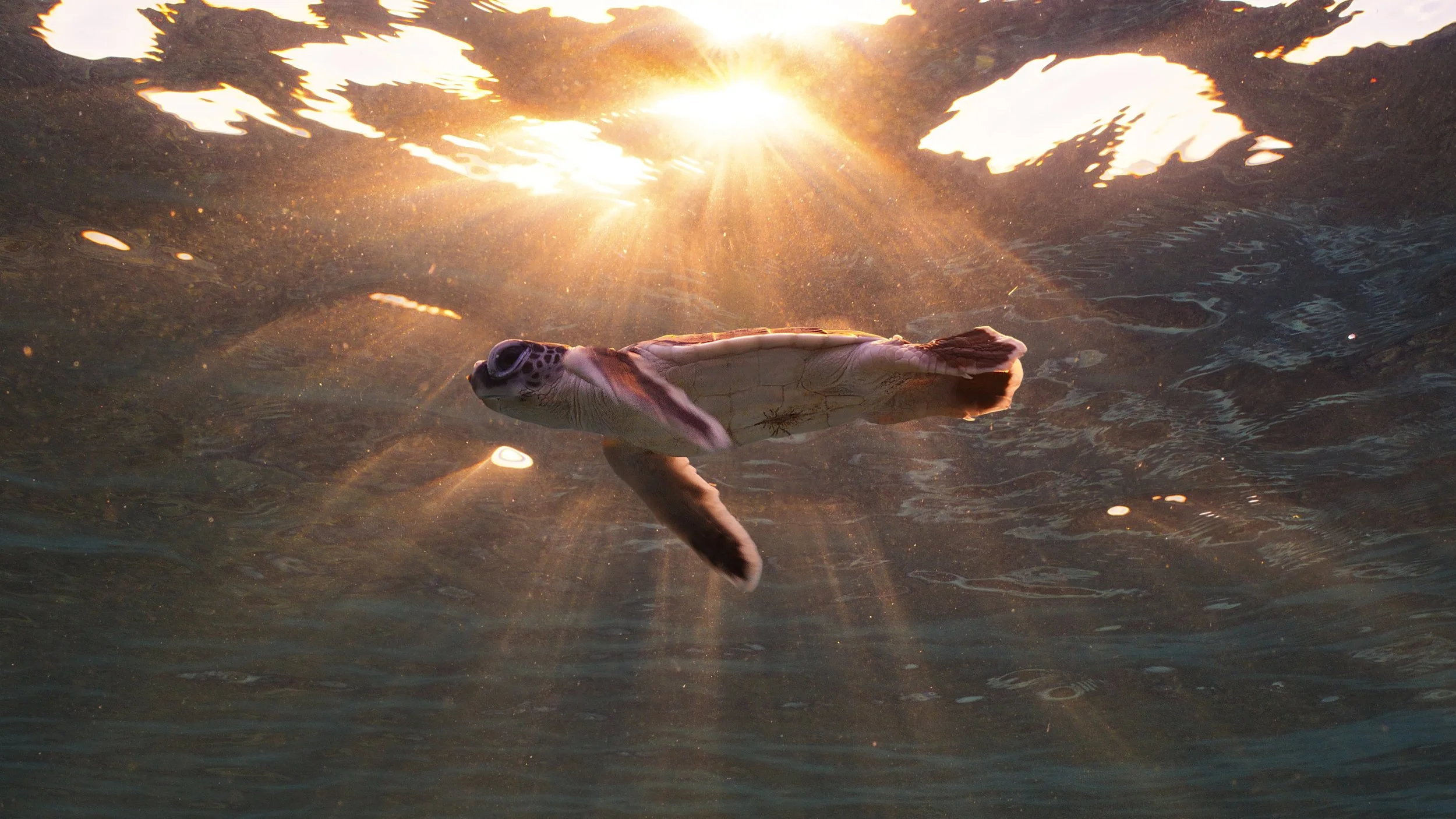
Filming Green Sea Turtle Hatchlings in Open Water – Great Barrier Reef in 8K
I’ve spent close to 400 days filming green sea turtle hatchlings on the Southern Great Barrier Reef.
It sounds excessive until you try to line everything up.
The nests erupt. The hatchlings reach the water. But if you want something more than a shoreline moment, you have to stay with them.
We swim with them for kilometres, tracking them off the reef flats and into deeper water, so we can film them where their real journey begins. In the open ocean.
That’s where the real magic starts.
Leaving the Reef Flats
The reef flats are chaotic. Surge, breaking waves, shallow sand movement, and constant predators. It’s raw and unpredictable.
But once a hatchling clears the reef edge and the bottom drops away, everything changes. The water turns deep blue. Light rays start cutting through the surface. The scale becomes obvious. A hatchling only a few centimetres long suspended over open water feels completely different to one scrambling through the shallow reef flats.
To film that moment consistently takes repetition.
Tide has to be right so they push straight out instead of sideways (and so we can get our 20-30kg camera’s into the water and swim with them!). Conditions need to be calm enough for visibility. The sun needs to be low enough for clean shafts of light to break the water. And the hatchlings have to keep swimming, and not become prey.
Most of the time, one of those elements doesn’t line up.
That’s why it takes years.
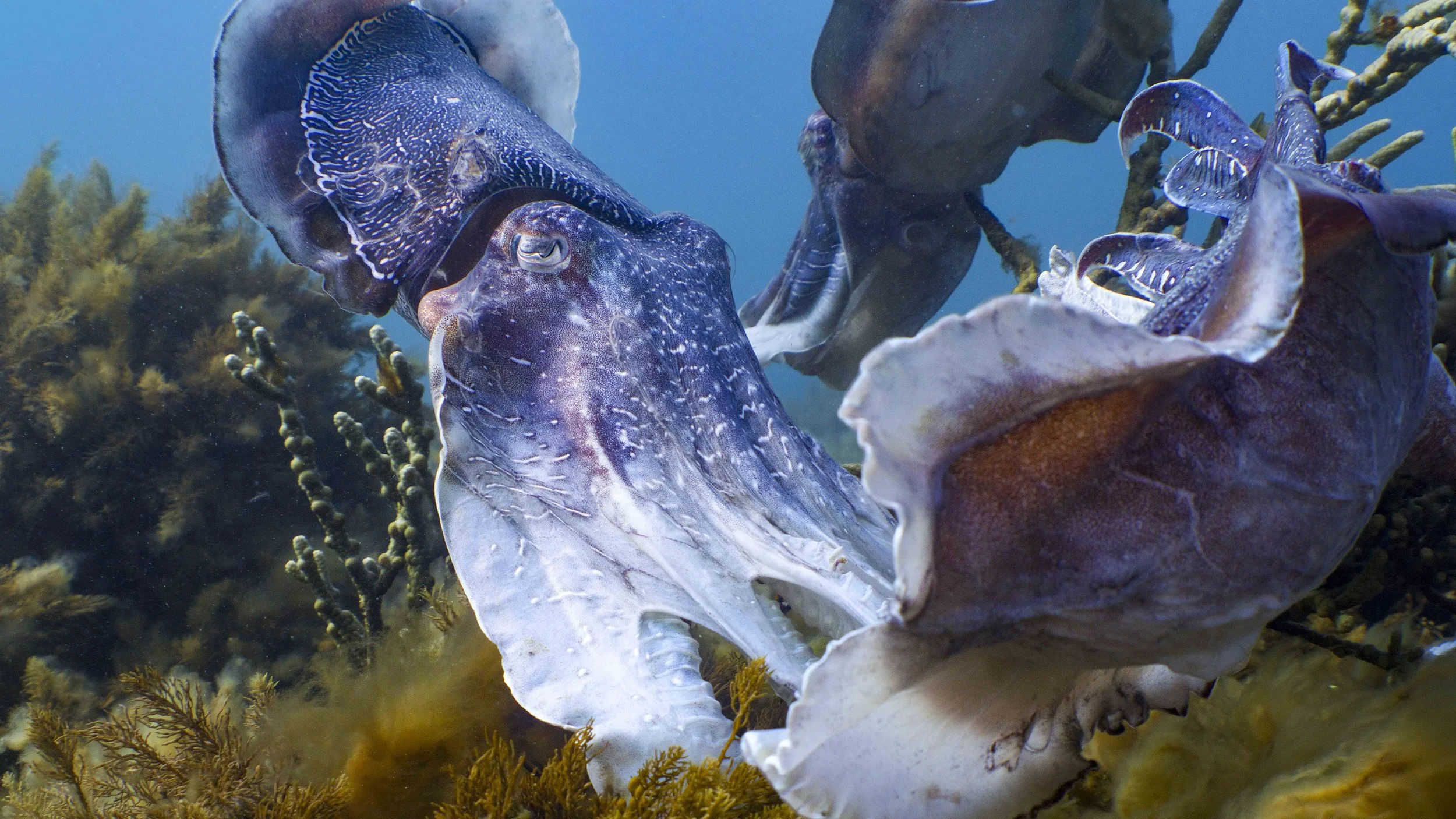
Stunning 8K Stock Footage of South Australia’s Leafy Sea Dragons & Giant Cuttlefish Aggregation: Dive Into Adelaide’s Underwater World
Explore rare 8K stock footage of Leafy Sea Dragons and the Giant Cuttlefish aggregation in South Australia’s temperate reefs. Captured in 8K cinematic detail, these exclusive underwater clips highlight the striking camouflage, vibrant mating displays, and unique behaviours of two of Australia’s most iconic marine species. Ideal for documentaries, natural history films, environmental productions, and more.

Sea Turtle 8K Stock Footage - Hatchlings, Mating & Behaviour on the Southern Great Barrier Reef
Discover rare 8K stock footage of Green Sea Turtles, hatchlings, and mating rituals in the Southern Great Barrier Reef. Stock Footage captured for natural history films, documentaries, environmental campaigns, and educational content.