
Filming Eagle Rays Breaching in 6K Ultra Slow Motion – Great Barrier Reef
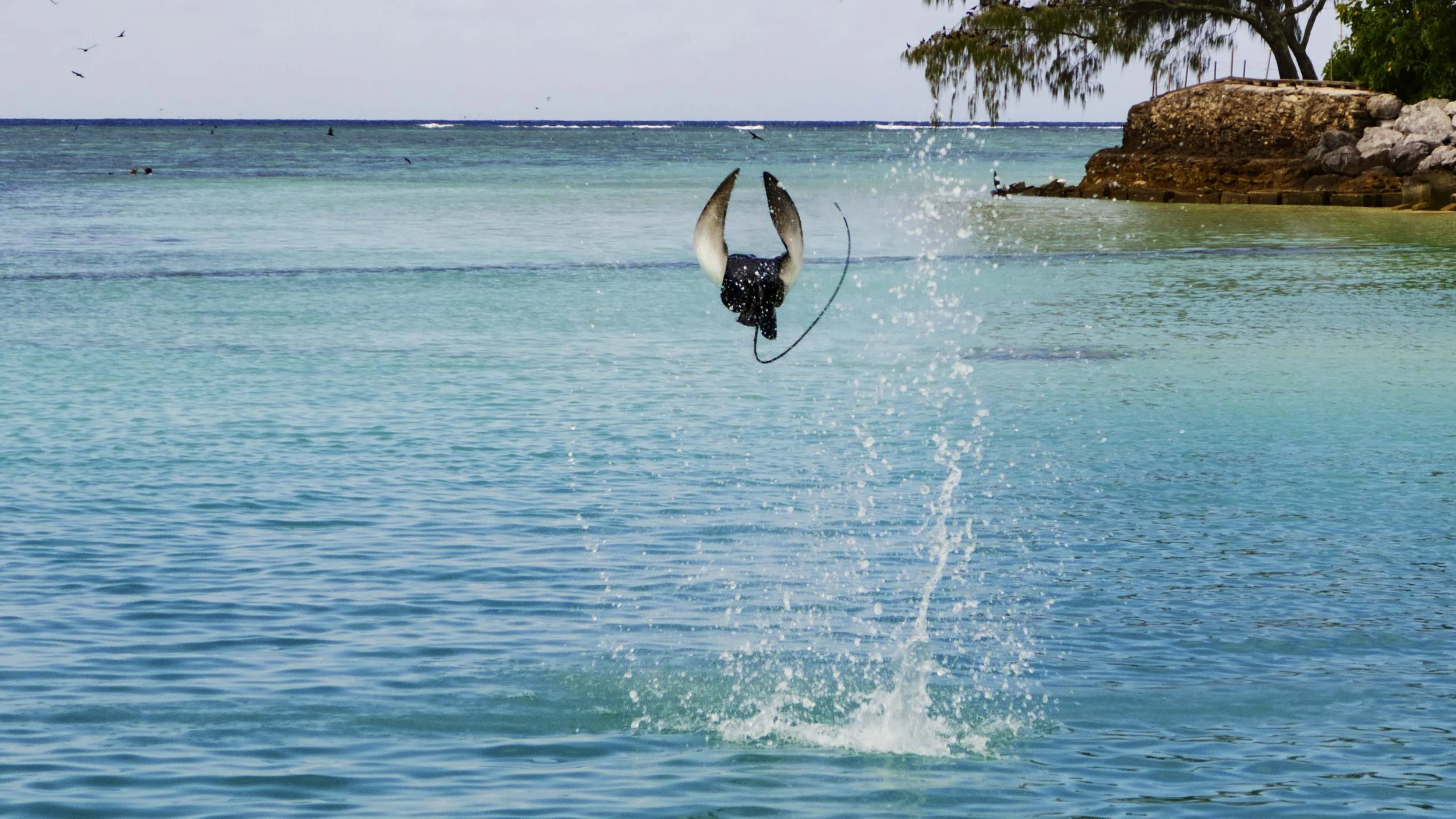
Seeing an Eagle Ray jump clear of the water never gets old.
But filming it properly is another thing entirely.
Eagle Ray breaching behaviour is unpredictable. You can sit for hours with nothing, then suddenly one launches clean out of the surface and it’s over in seconds. If you’re not locked in and ready, you miss it.
This sequence was filmed on the Southern Great Barrier Reef after days of watching movement patterns and working out where the rays were most likely to surface.
Understanding the Behaviour
Eagle rays don’t breach constantly. It’s occasional, and often linked to feeding, parasite removal, social behaviour, or simple bursts of energy. There’s also tidal considerations to take into account.
They build momentum underwater before breaking the surface in a single powerful motion. The actual breach lasts a fraction of a second.
To capture it clearly, you need reach, stability, and frame rate.
The Filming Method
All sequences were filmed on the RED V-RAPTOR, locked off on a sturdy tripod with telephoto lenses.
Long lenses are essential. They compress distance, isolate the subject against the horizon, and allow space between camera and animal. At those focal lengths, even minor movement becomes exaggerated, so a solid tripod setup is critical.
Everything was shot in 6K at 180 frames per second.
At standard frame rates the breach feels abrupt. At 180fps ultra slow motion, you see the full wing extension, the body flex, the water displacement and the re-entry. It gives natural history productions the ability to study motion properly while retaining broadcast quality resolution.
Manual focus was also key. Autofocus will hunt at long focal lengths, especially over reflective water. Pre focusing on a set distance and making subtle manual adjustments based on surface activity keeps the frame clean and stable when the breach happens.
The RED’s pre record function made a real difference as well. With unpredictable behaviour like this, you often react a fraction late. Pre record buffers several seconds before you hit the trigger, which means you capture the full take off rather than just the tail end.
Those tools matter when the entire event lasts less than a second.
Time and Positioning
Like most wildlife behaviour, this isn’t luck.
It’s repetition and positioning. Long sessions scanning the surface. Reading current lines. Watching where rays are feeding. Adjusting framing constantly to anticipate direction rather than react to it.
You don’t chase breaches. You prepare for them.
When it lines up, it happens fast.
6K Eagle Ray Breach Stock Footage Available
The full eagle ray breaching sequences are available as 6K ultra slow motion stock footage.
The gallery includes multiple breaches captured at 180fps, detailed wing movement in mid air, clean horizon lines, surface impact sequences, and stable telephoto compositions from the Southern Great Barrier Reef.
This footage is suited to natural history documentaries, marine wildlife series, broadcast productions, and premium slow motion sequences requiring unusual marine behaviour.
Additional Great Barrier Reef stock footage is also available, including reef sharks, sea turtles, coral reef ecosystems, and open water behavioural sequences. My full stock footage gallery is available on my website.
Tom Park – Australian Underwater Cinematographer
Tom Park is an accomplished underwater cinematographer and director from Australia, with over a decade of experience working in the underwater film industry. Tom has worked across major feature documentaries and natural history films including Blue Planet III, and for clients including BBC, Netflix, Amazon, Silverback Films, ARTE and David Attenborough. His films have been recognised with awards from film festivals around the world, including the prestigious Wildscreen Festival.
Tom is known for his technical expertise in working with underwater cameras and equipment, as well as his creative vision in capturing the beauty and uniqueness of the underwater world. He is passionate about ocean conservation and using his art to raise awareness about the importance of protecting marine ecosystems.