
Behind the Lens on Leon Marchand: Beyond Gold Series
When most people think about Olympic swimming, they picture race day. The crowd. The atmosphere. The medals.
What they do not see are the thousands of hours that happen long before an athlete ever steps onto the blocks.
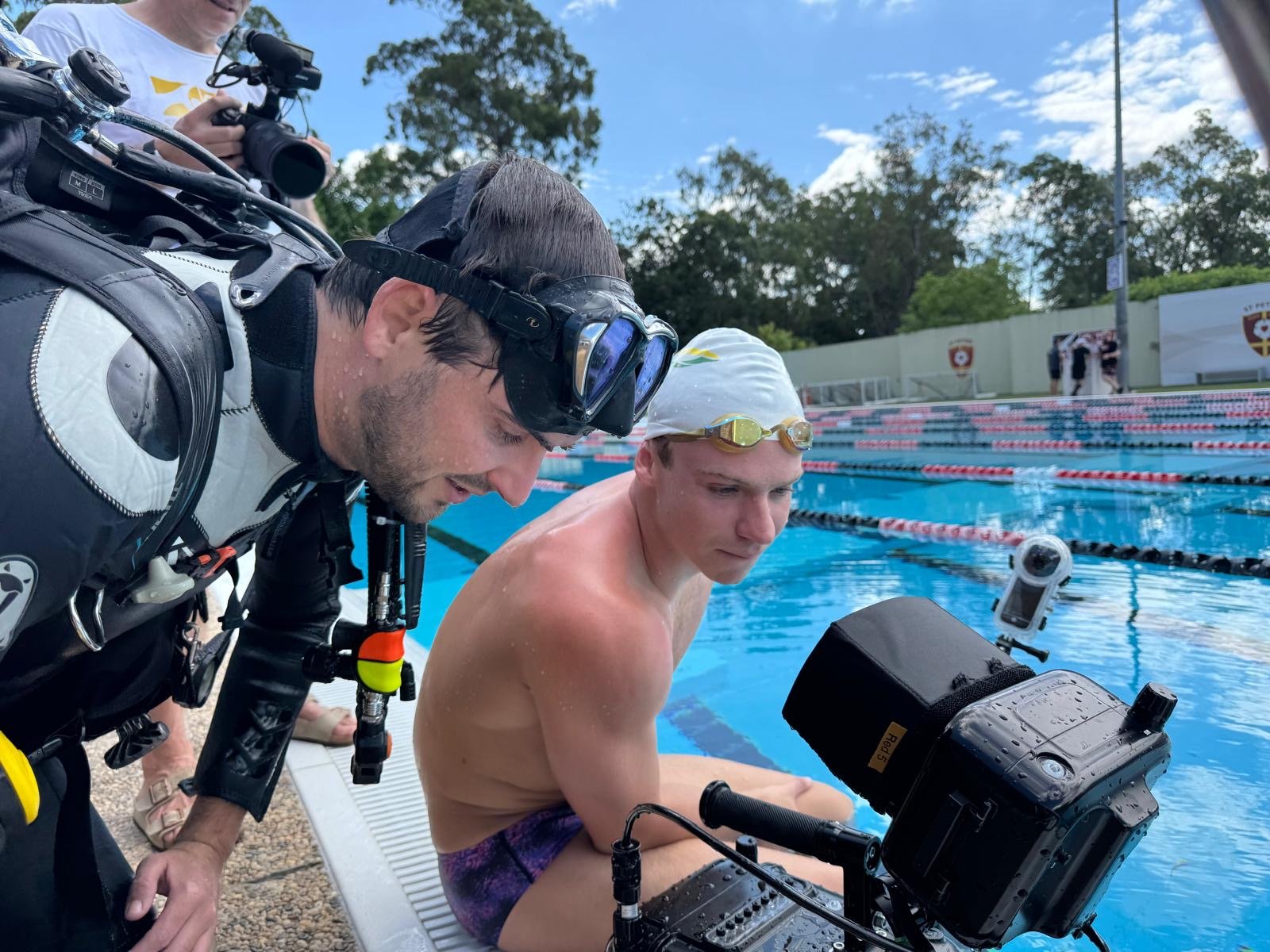
Earlier this year, I joined the production team behind Leon Marchand: Beyond Gold as an underwater cinematographer and topside camera operator, filming Leon's Australian training campaign in the lead up to the World Championships following his extraordinary multi gold medal success at the Paris Olympics.
Produced by Xavier Marchand and Qlad Labs France, and premiering on France.TV, the series follows Leon during a period where much of his life revolved around one thing: training.
As a filmmaker, that meant documenting not just the performances everyone knows him for, but the thousands of repetitions, early mornings, and long days that sit behind them.
Behind the Scenes of Netflix’s All the Sharks: An Insane Underwater Shoot!
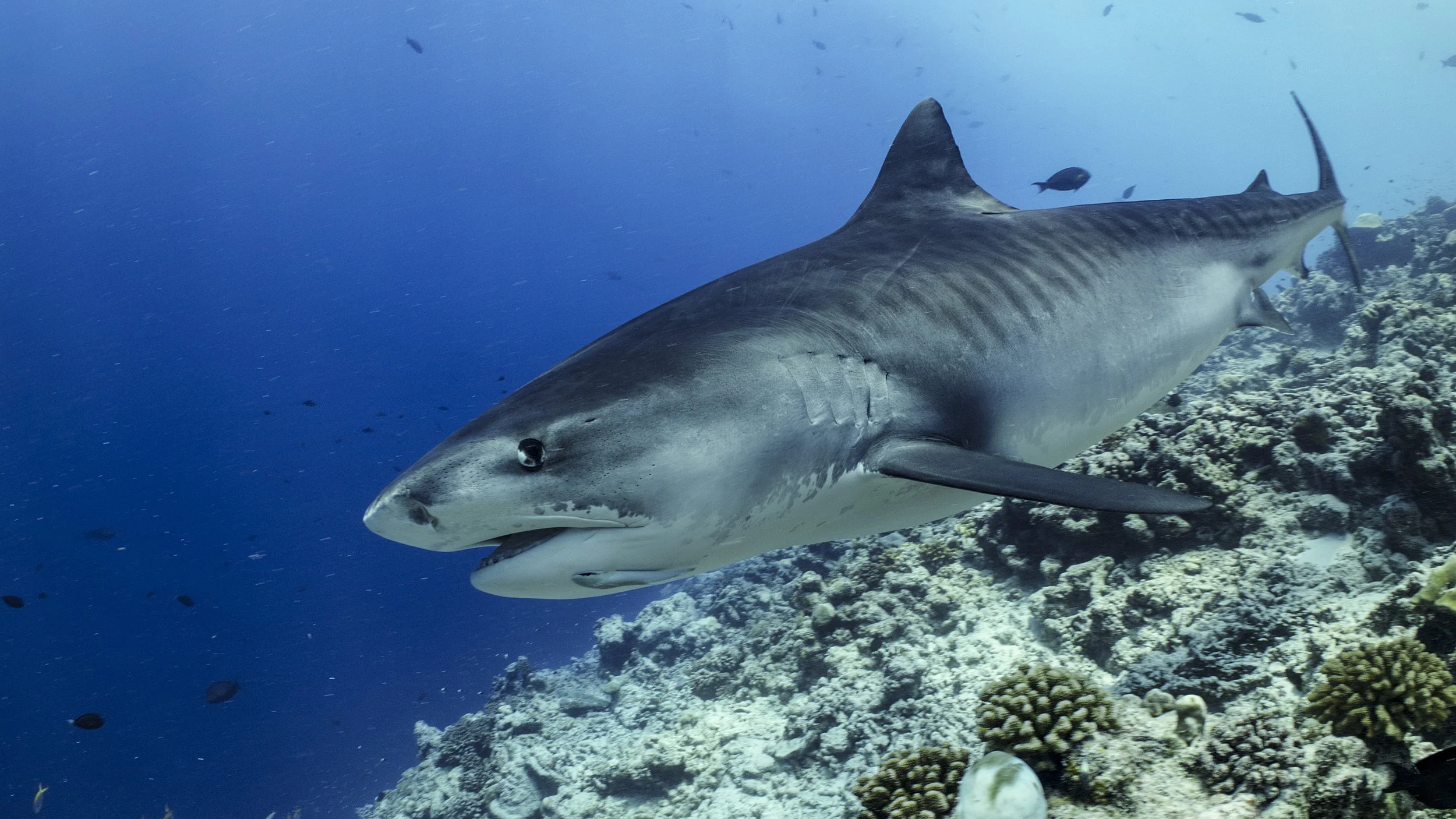
Working on Netflix’s All the Sharks was on a scale I’ve never experienced before. At times, there were over 50 crew on location and more than three tonnes of camera equipment. Every day felt like orchestrating a mobile underwater production unit capable of moving between multiple countries, ecosystems, and shark species, all while keeping the operation safe, seamless, and cinematic.
The Gear and Camera Set Up:
Underwater, we were shooting on an assortment of RED cameras: my 8K RED V-Raptor, two more V-Raptor VV models, a RED Gemini, RED Monstro, and RED Helium 8K, a total of 6 RED Underwater cinema systems. Each had a selection of Gates and Nauticam housings, domes, and lenses. The technical complexity alone was staggering, syncing camera frames, white balances, timecodes, and exposure across different cameras while maintaining the freedom to capture unpredictable shark behaviour.
Topside, the production used 4 Varicams, 4 Sony FX3s, a range of FX6s, 30+ GoPro’s rigged absolutely everywhere, and countless drones ensuring that aerials, presenter sequences, and surface interactions were fully covered.
Behind the Scenes Filming Deadly 60 with Steve Backshall
Working on Deadly 60 is a bit like jumping onto a rollercoaster in the middle of the first loop, it’s fast, chaotic, and completely exhilarating. I had the privilege of filming parts of Season 6 and the upcoming Season 7, both underwater and topside as the Director of Photography (DOP), and it’s an experience that pushes every aspect of your cinematography skills.
The Challenge of the Two Shot:
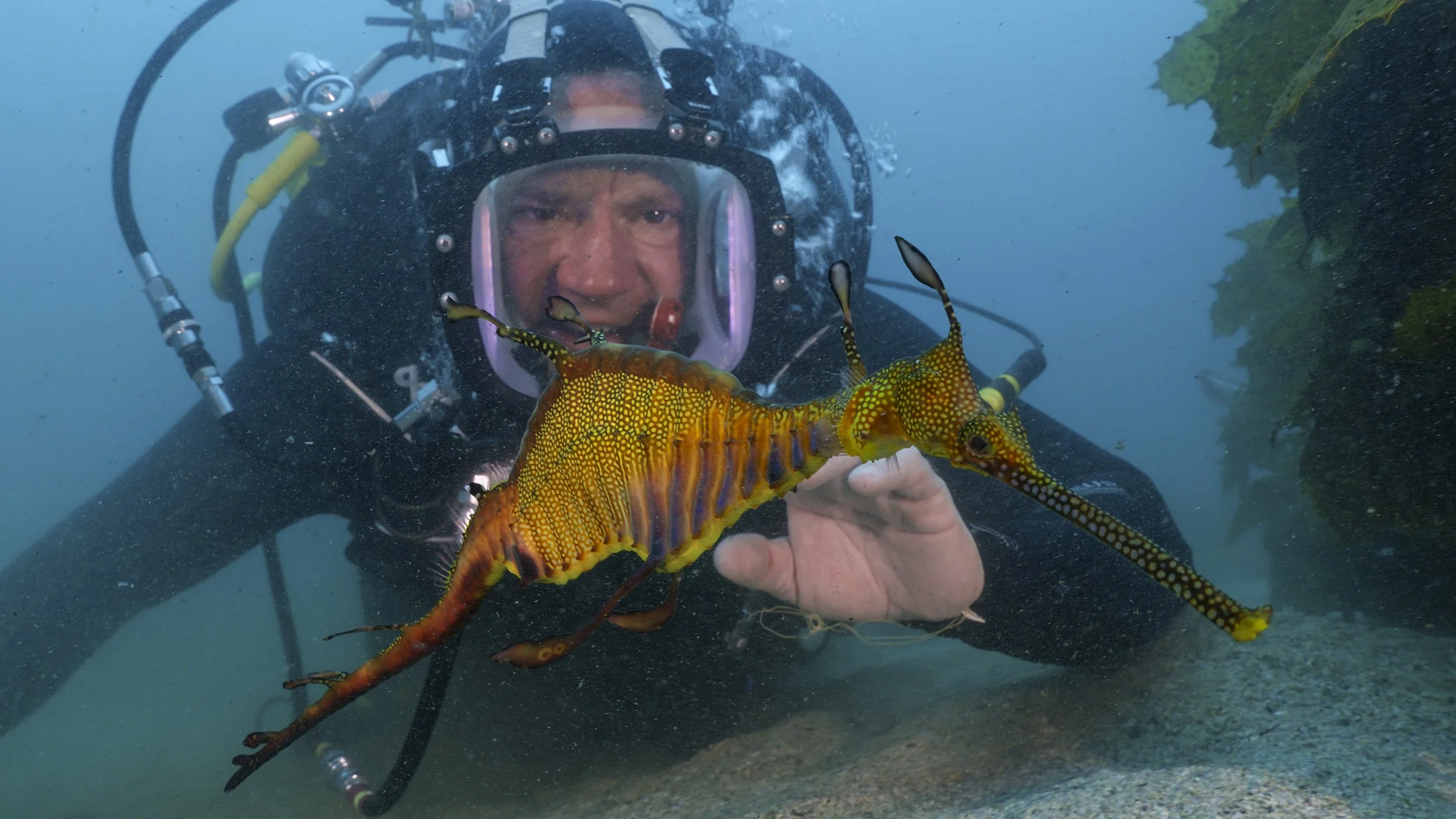
One of the toughest things we do is the “two-shot”, getting Steve and the animal in frame together, both above and underwater. For example, filming Weedy Sea Dragons in Sydney or Grey Nurse Sharks in Jervis Bay, the animal isn’t going to pause for the presenter. It’s about positioning Steve in a way that feels natural while keeping the composition cinematic, and anticipating how the animal will move so the shot works from start to finish, and there’s enough time for Steve to present,
Underwater, this is often a challenge. You have currents, visibility, and we’re operating in a world that as humans, we’re simply not meant for. This is where knowing how to read wildlife, and how to position yourself, with both you and the presenter working in split second tandom is an absolute necessity. Both myself and Steve have to read the wildlife, and postion ourselves in a manner that allows both Steve and the animal to stay in frame, often with no time to communicate underwater. This may sound simple, but there’s a lot of moving parts! But when it works (and with experienced presenters and operators, it often does), it’s cinematic magic.
Filming Green Sea Turtle Hatchlings in Open Water – Great Barrier Reef in 8K
I’ve spent close to 400 days filming green sea turtle hatchlings on the Southern Great Barrier Reef.
It sounds excessive until you try to line everything up.
The nests erupt. The hatchlings reach the water. But if you want something more than a shoreline moment, you have to stay with them.
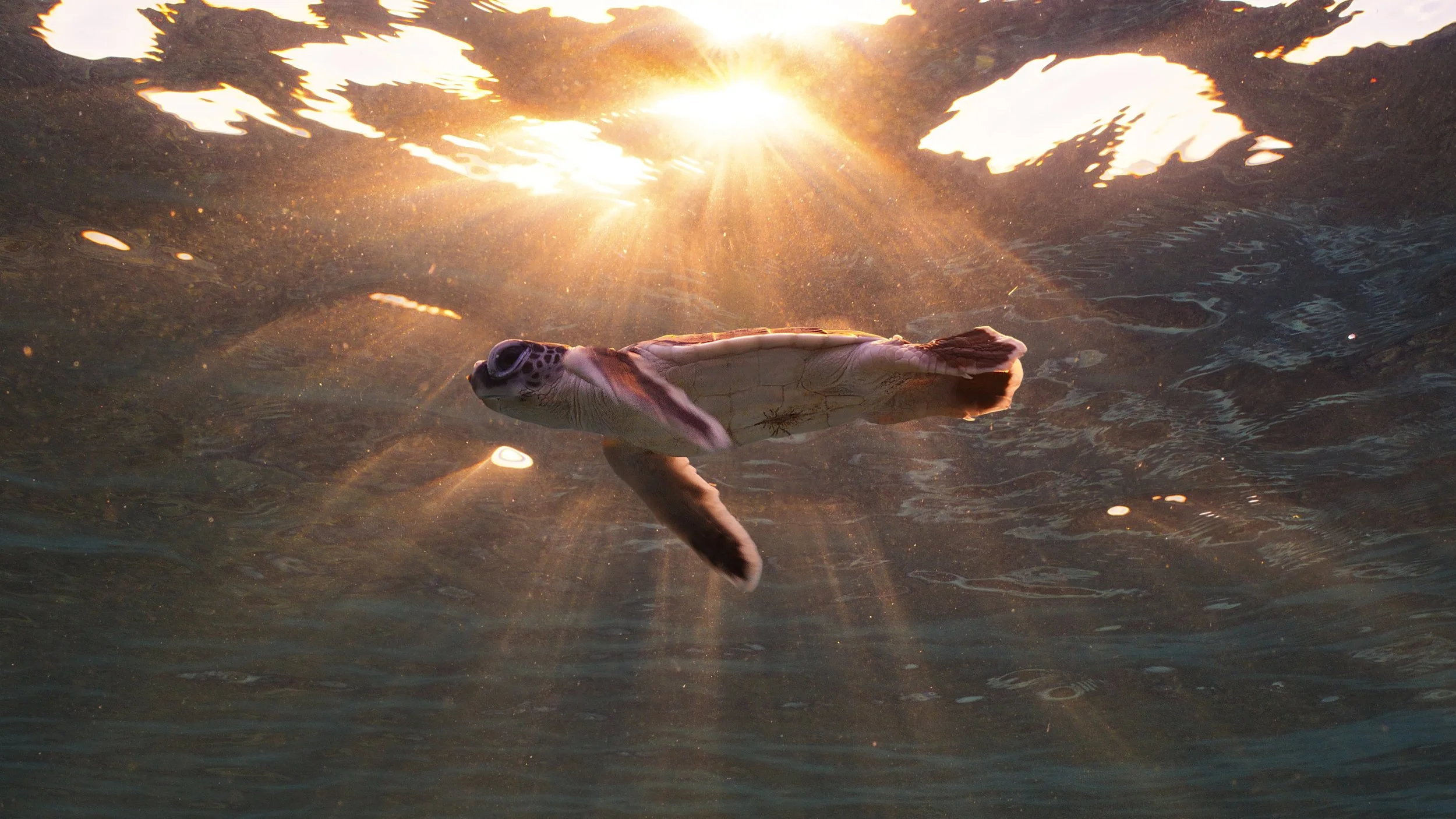
We swim with them for kilometres, tracking them off the reef flats and into deeper water, so we can film them where their real journey begins. In the open ocean.
That’s where the real magic starts.
Leaving the Reef Flats
The reef flats are chaotic. Surge, breaking waves, shallow sand movement, and constant predators. It’s raw and unpredictable.
But once a hatchling clears the reef edge and the bottom drops away, everything changes. The water turns deep blue. Light rays start cutting through the surface. The scale becomes obvious. A hatchling only a few centimetres long suspended over open water feels completely different to one scrambling through the shallow reef flats.
To film that moment consistently takes repetition.
Tide has to be right so they push straight out instead of sideways (and so we can get our 20-30kg camera’s into the water and swim with them!). Conditions need to be calm enough for visibility. The sun needs to be low enough for clean shafts of light to break the water. And the hatchlings have to keep swimming, and not become prey.
Most of the time, one of those elements doesn’t line up.
That’s why it takes years.