
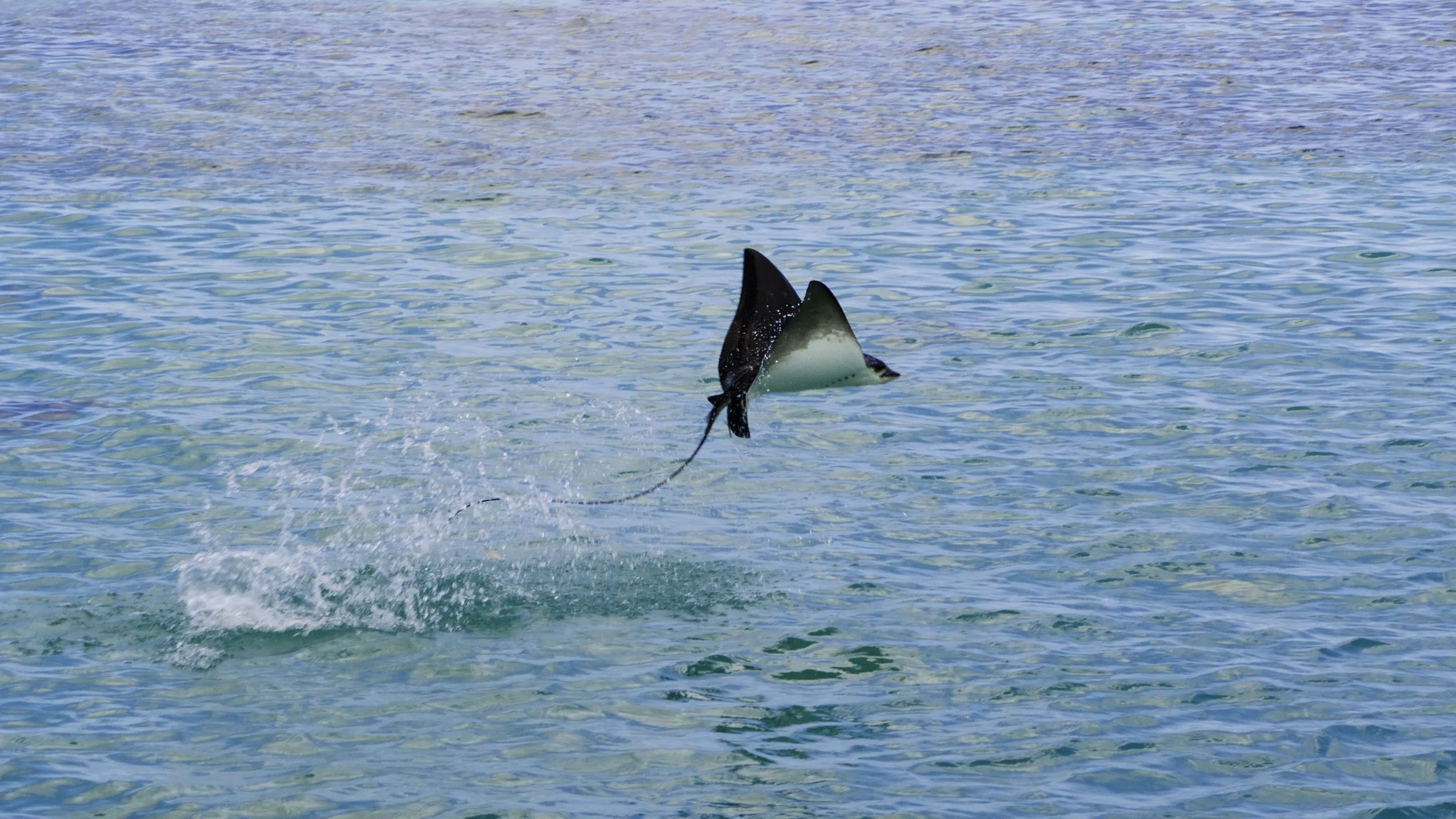
Filming Eagle Rays Breaching in 6K Ultra Slow Motion – Great Barrier Reef
The Filming Method: All sequences were filmed on the RED V-RAPTOR, locked off on a sturdy tripod with telephoto lenses.
Long lenses are essential. They compress distance, isolate the subject against the horizon, and allow space between camera and animal. At those focal lengths, even minor movement becomes exaggerated, so a solid tripod setup is critical.
Everything was shot in 6K at 180 frames per second.
At standard frame rates the breach feels abrupt. At 180fps ultra slow motion, you see the full wing extension, the body flex, the water displacement and the re-entry. It gives natural history productions the ability to study motion properly while retaining broadcast quality resolution.
Manual focus was also key. Autofocus will hunt at long focal lengths, especially over reflective water. Pre focusing on a set distance and making subtle manual adjustments based on surface activity keeps the frame clean and stable when the breach happens.
The RED’s pre record function made a real difference as well. With unpredictable behaviour like this, you often react a fraction late. Pre record buffers several seconds before you hit the trigger, which means you capture the full take off rather than just the tail end.
Those tools matter when the entire event lasts less than a second.
Time and Positioning
Like most wildlife behaviour, this isn’t luck.
It’s repetition and positioning. Long sessions scanning the surface. Reading current lines. Watching where rays are feeding. Adjusting framing constantly to anticipate direction rather than react to it.
You don’t chase breaches. You prepare for them.
When it lines up, it happens fast.
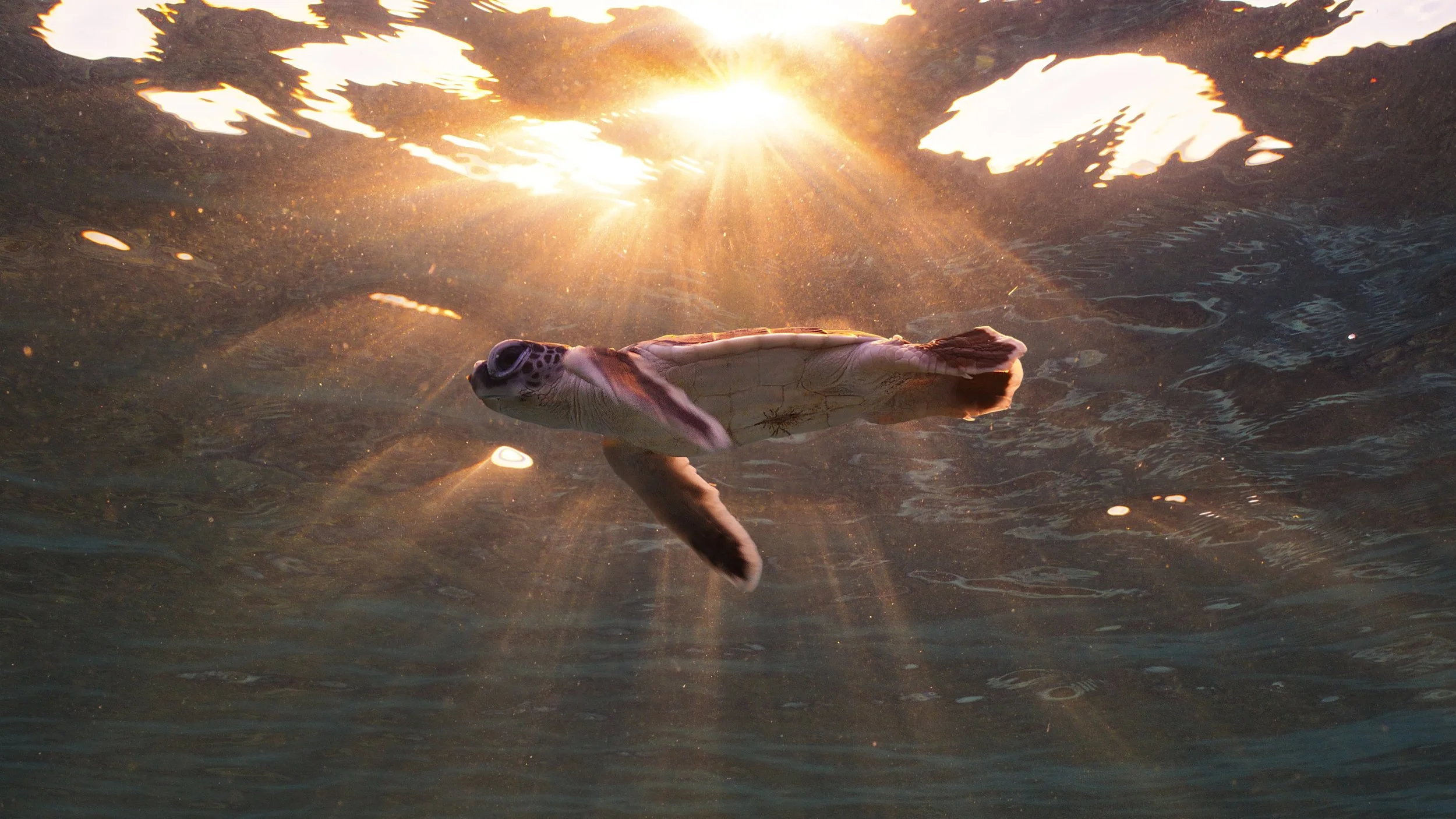
Filming Green Sea Turtle Hatchlings in Open Water – Great Barrier Reef in 8K
I’ve spent close to 400 days filming green sea turtle hatchlings on the Southern Great Barrier Reef.
It sounds excessive until you try to line everything up.
The nests erupt. The hatchlings reach the water. But if you want something more than a shoreline moment, you have to stay with them.
We swim with them for kilometres, tracking them off the reef flats and into deeper water, so we can film them where their real journey begins. In the open ocean.
That’s where the real magic starts.
Leaving the Reef Flats
The reef flats are chaotic. Surge, breaking waves, shallow sand movement, and constant predators. It’s raw and unpredictable.
But once a hatchling clears the reef edge and the bottom drops away, everything changes. The water turns deep blue. Light rays start cutting through the surface. The scale becomes obvious. A hatchling only a few centimetres long suspended over open water feels completely different to one scrambling through the shallow reef flats.
To film that moment consistently takes repetition.
Tide has to be right so they push straight out instead of sideways (and so we can get our 20-30kg camera’s into the water and swim with them!). Conditions need to be calm enough for visibility. The sun needs to be low enough for clean shafts of light to break the water. And the hatchlings have to keep swimming, and not become prey.
Most of the time, one of those elements doesn’t line up.
That’s why it takes years.
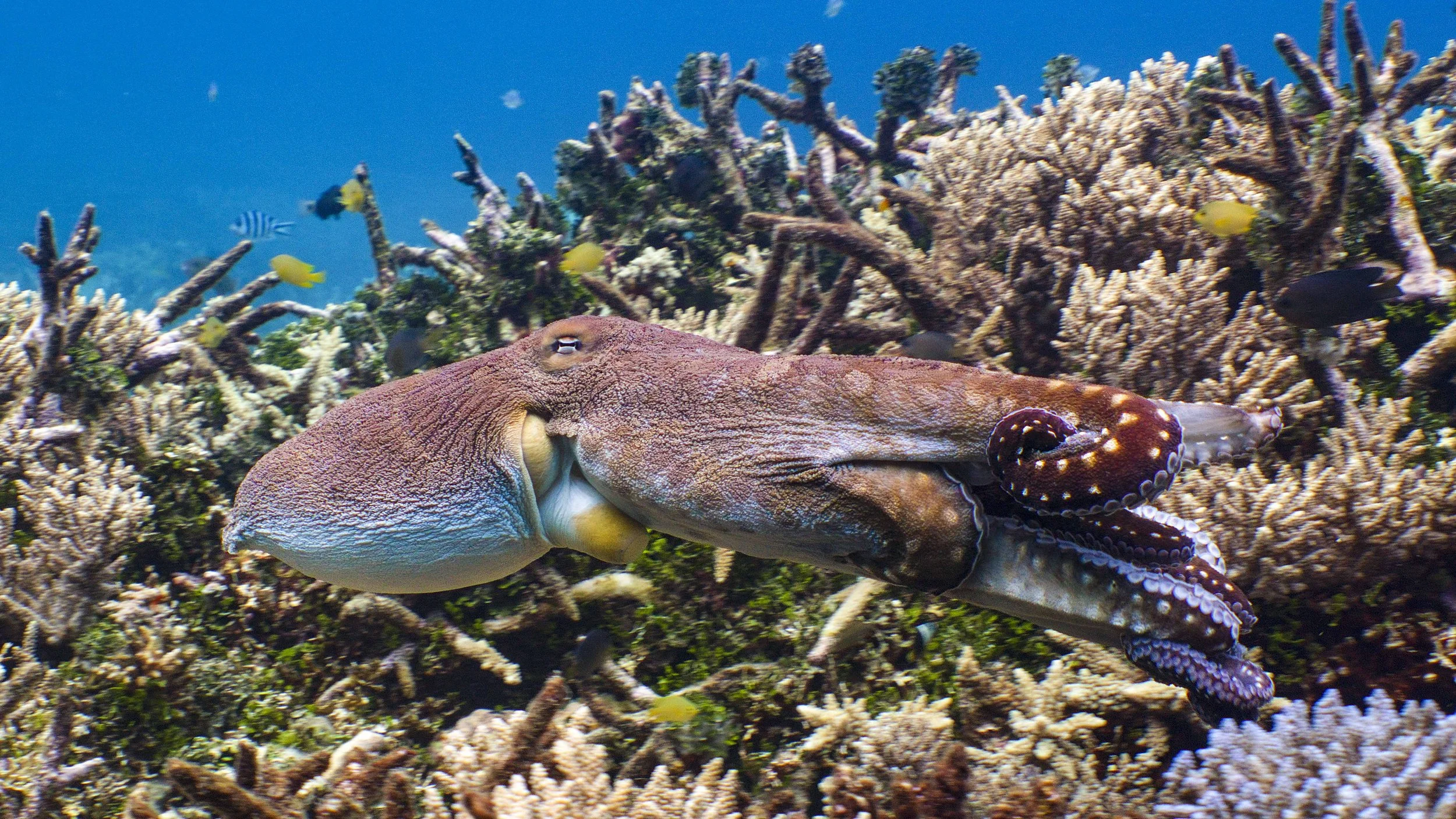
Filming a Hunting Day Octopus on the Great Barrier Reef in 8K
There’s nothing predictable about filming a day octopus.
Some bolt the second they feel pressure in the water. Others hold their ground, watching you just as closely as you’re watching them. This particular shoot on the Southern Great Barrier Reef came after a few days of doing very little filming at all and a lot of observing.
I’d found an individual working a section of reef near Heron Island. Rather than rush it, I spent time learning its routine. Where it sheltered. How far it ranged. When it chose to move. When it chose to hunt.
That patience is what led to this 8K octopus hunting stock footage sequence.
Understanding Octopus Behaviour Before You Hit Record
Day octopus are serious predators. When they hunt, there’s intent behind every movement.
They move across coral bommies using their arms almost like legs, then suddenly jet across open sand when they feel exposed. As they transition between coral, rubble, and sand, their skin shifts constantly. Colour, contrast, texture. It’s not dramatic for the sake of it. It’s camouflage working in real time.
In this sequence, you can see the octopus probing into crevices, feeling for crabs and small reef fish. It pauses, recalibrates, then moves again. Every decision is calculated.
To capture that kind of natural behaviour on the Great Barrier Reef, you need more than just a good camera. You need time in the water.

Sea Turtle 8K Stock Footage - Hatchlings, Mating & Behaviour on the Southern Great Barrier Reef
Discover rare 8K stock footage of Green Sea Turtles, hatchlings, and mating rituals in the Southern Great Barrier Reef. Stock Footage captured for natural history films, documentaries, environmental campaigns, and educational content.
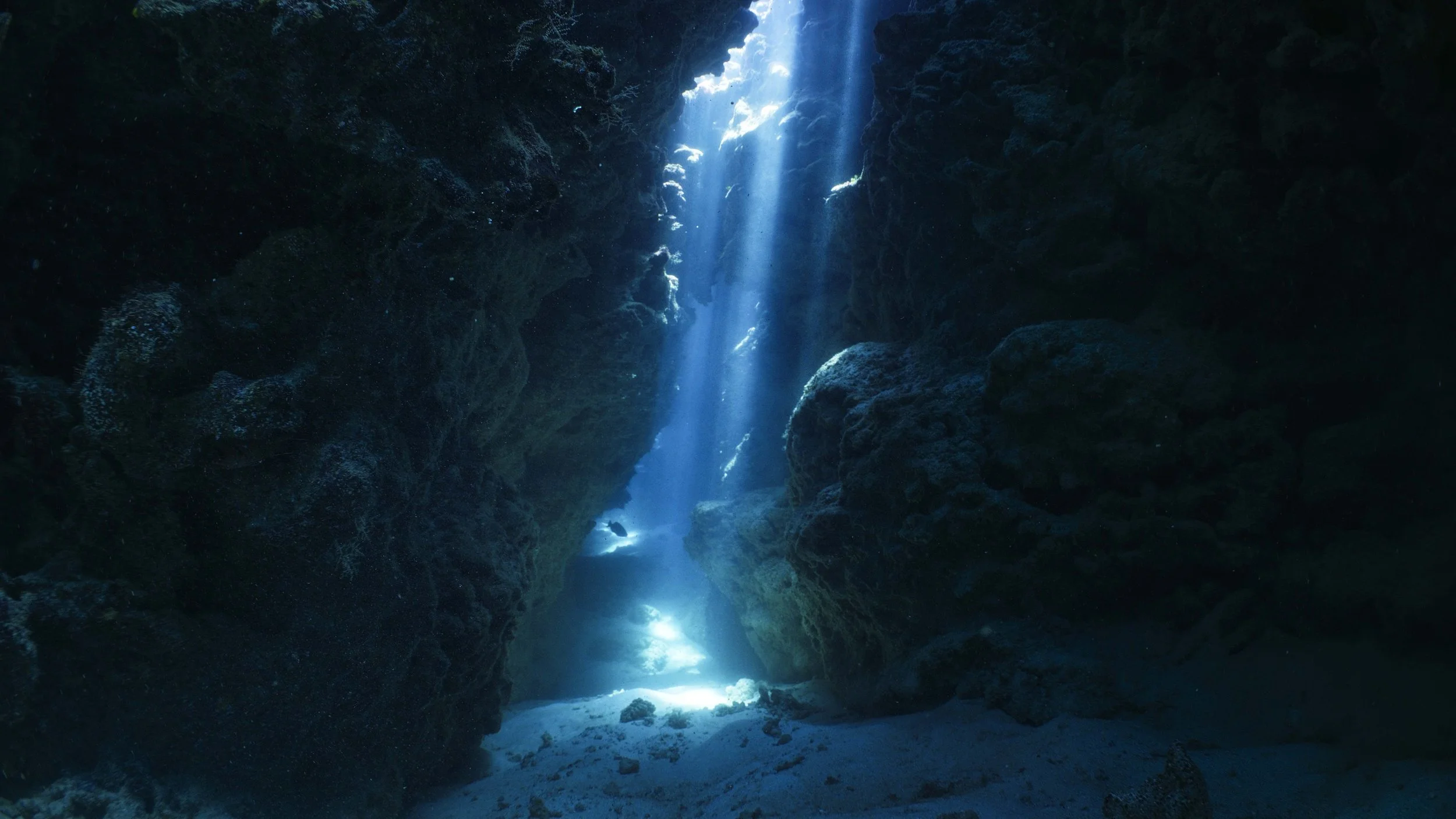
8K Stock Footage from the Untouched Depths of Lihou Reef & Beyond: The Remote Coral Sea Reefs
Discover rare, high-quality 8K stock footage from the remote reefs of the Coral Sea, including Lihou Reef, Holmes Reef, and Flinders Reef. Captured during an 8-day expedition, our footage showcases vibrant marine life and pristine coral ecosystems over 600 km from the Australian coast. Perfect for documentaries, natural history films, or commercial applications.
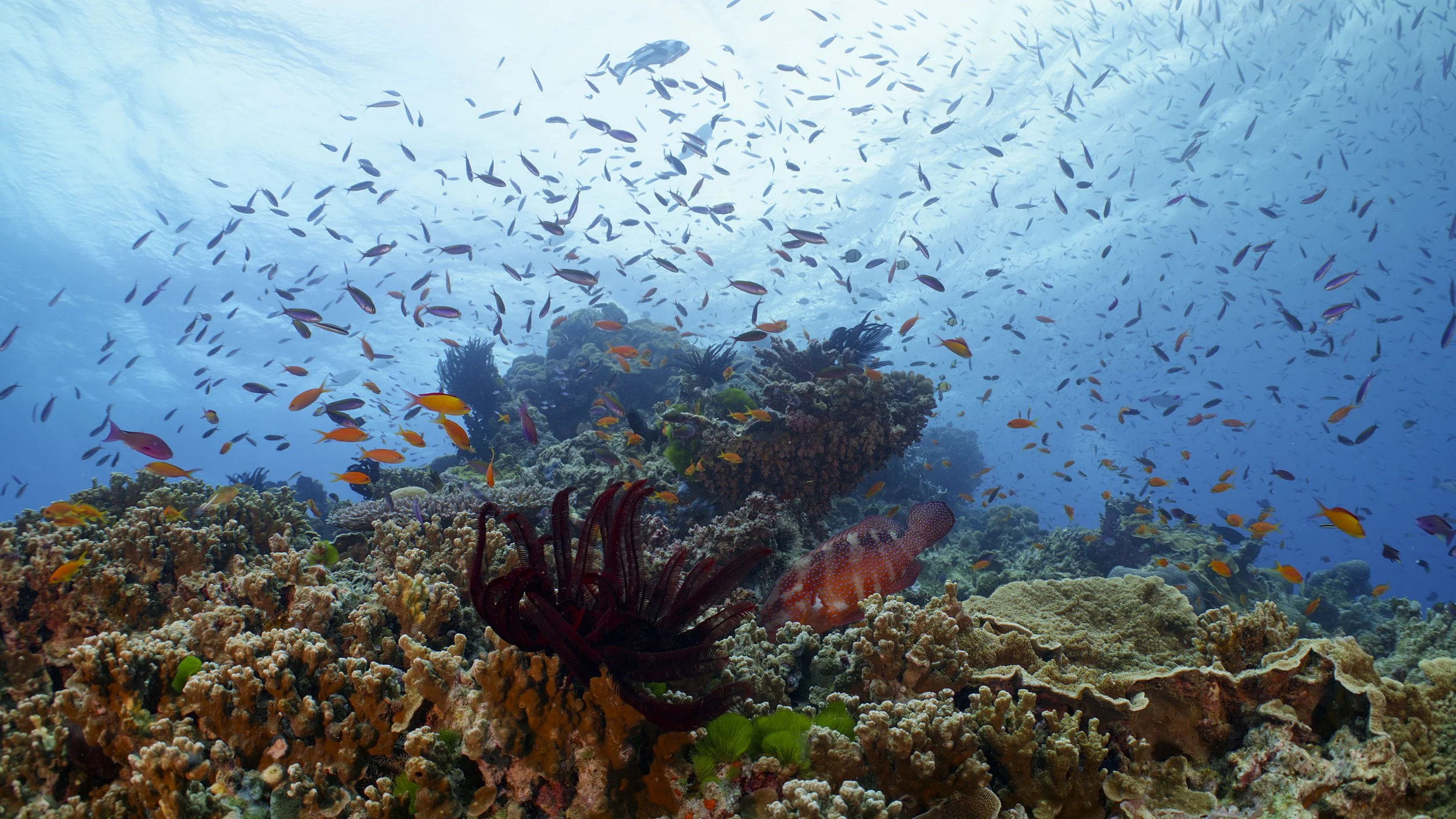
Explore the Wonders of the Great Barrier Reef with Stunning 8K Stock Footage
Explore stunning Great Barrier Reef stock footage with ultra high-quality, 4K, 6K and 8K underwater video clips. Perfect for documentaries, films and TV, marketing, and educational content. Access a diverse archive of coral reefs, marine life, and vibrant ocean scenes to bring your projects to life. Browse our collection of authentic reef footage now.