
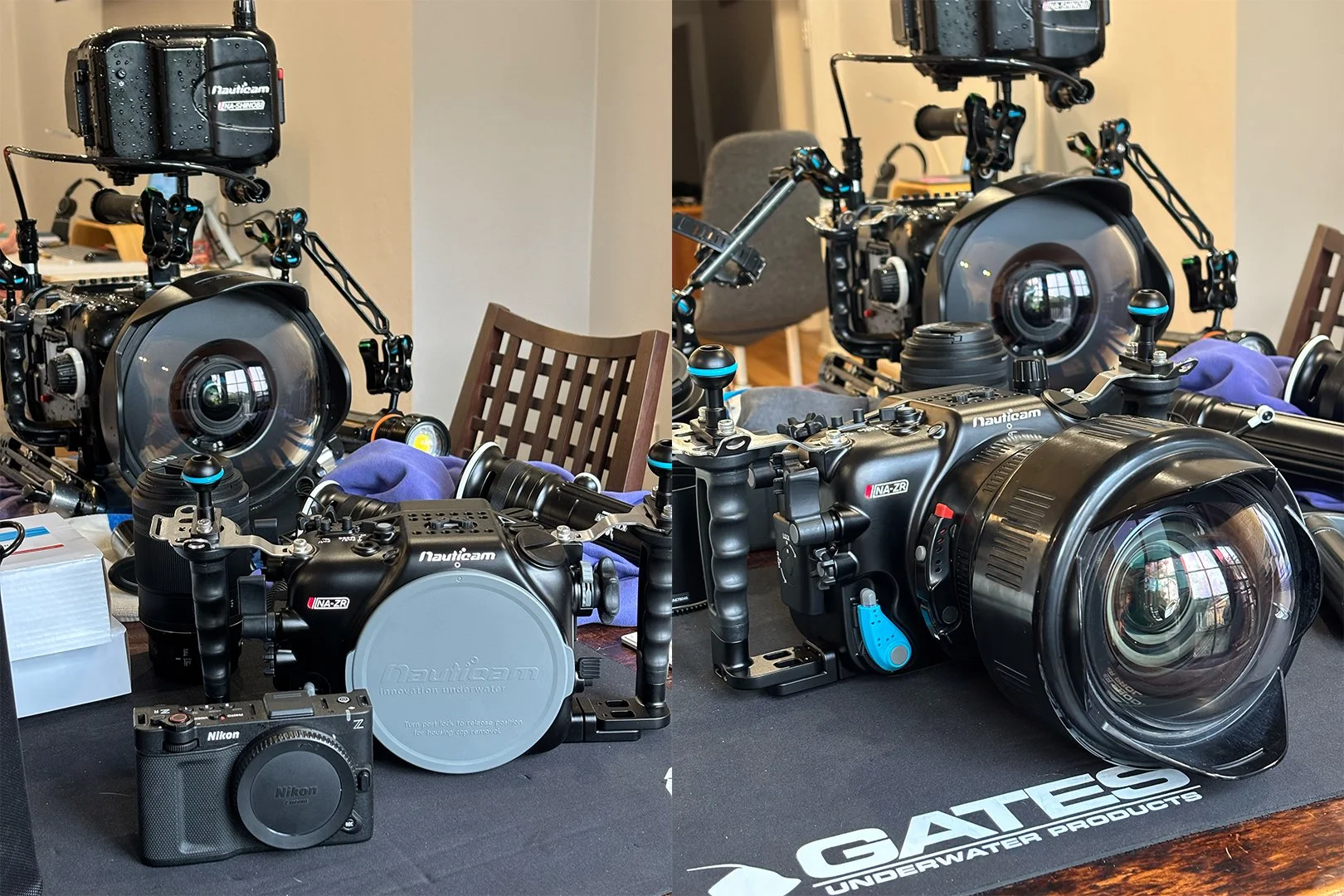
Thoughts on the NIKON ZR in Film Production
Alright, I think Nikon may have accidentally made one of the most useful filmmaking cameras currently available.
After spending a significant amount of time working with the Nikon ZR alongside my RED V-Raptor 8K, I've come to see it as a genuinely valuable tool for professional filmmakers. It isn't designed to replace a dedicated cinema camera, but rather to complement one. What impressed me most was how seamlessly it integrates into an existing production workflow, while still delivering impressive image quality, flexibility, and features in such a compact package.
What's interesting isn't necessarily any single feature. It's how all of the features come together.
Because while there are plenty of cameras that shoot beautiful images, very few cameras fit seamlessly into an existing professional cinema workflow while also remaining small, lightweight, affordable, and practical enough to become an everyday workhorse.
And that's exactly where the Nikon ZR shines.
Underwater Audio Production 101
Comms, Full Face Masks, and Sync Workflows in Broadcast Natural History
Underwater cinematography gets all the attention.
The light rays. The sharks. The whales. The big wide reef scenes.
But if you strip away clean audio, most of those sequences fall apart.
On major natural history productions like Deadly 60, All the Sharks, and most presenter led programs underwater audio isn’t an afterthought. It’s a fully engineered system. And it’s one of the most technically demanding parts of filming underwater.
Here’s how it actually works.
Full Face Masks: Not Just a Mic
For presenter-led sequences underwater, we don’t use a simple hydrophone and hope for the best.
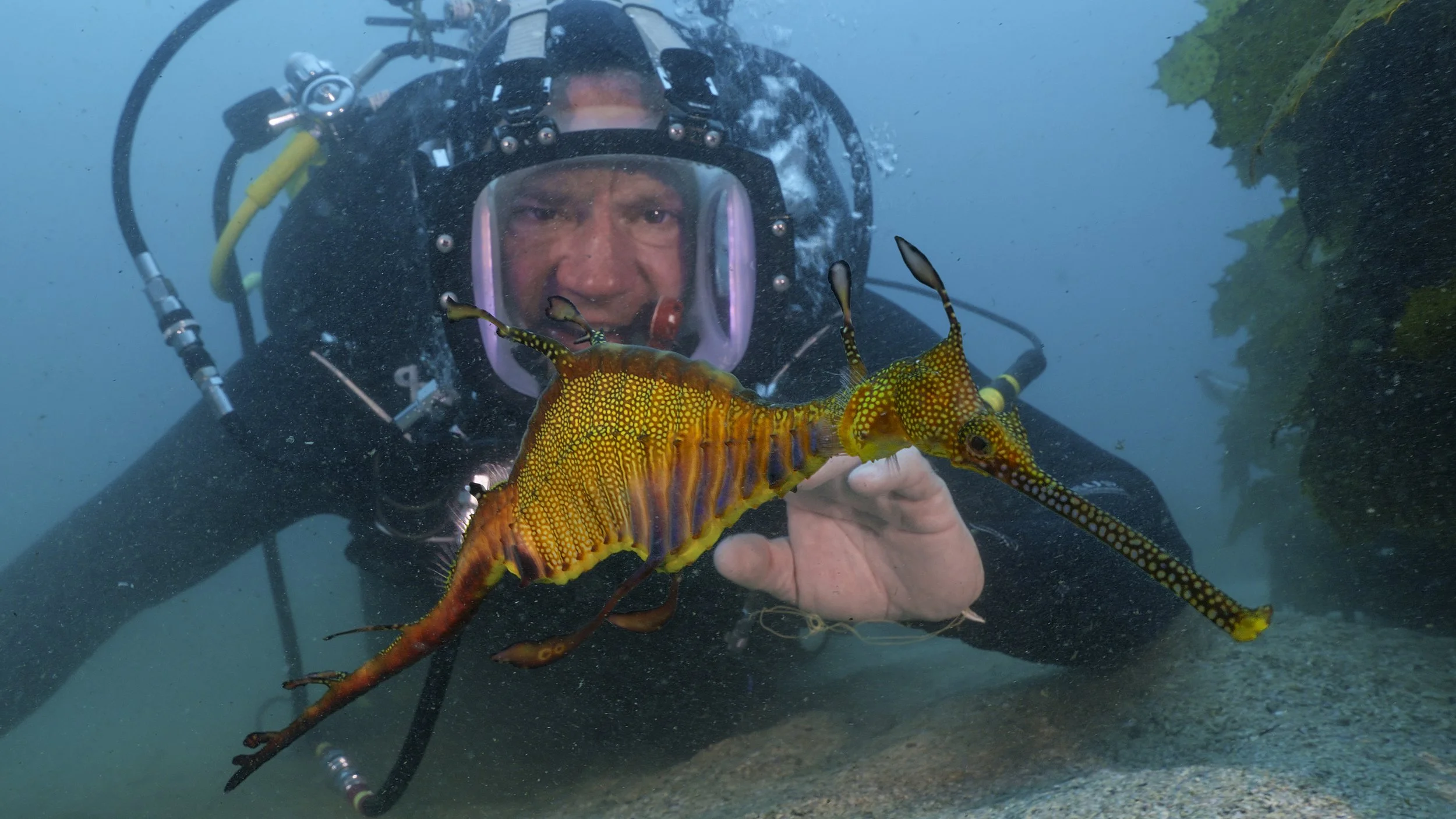
We use full face masks such as those produced by OTS (Ocean Technology Systems) or Ocean Reef. These are sealed dive masks with integrated microphones and comms systems built into the regulator assembly. They allow the presenter to breathe normally while delivering clean dialogue directly into a sealed mic environment.
Why this matters:
• No bubbles blasting across an open mic
• No regulator noise overpowering speech
• Stable mic placement relative to the mouth
• Continuous two-way communication with surface and with the dive teams and camera operator
The mask becomes part of the audio chain.
On a show built around reaction and presence, this is critical. When a shark changes direction or a coral spawning event suddenly happens, the reaction needs to be immediate. Authentic. Clean.
You don’t get second takes in wildlife.
Filming a Hunting Day Octopus on the Great Barrier Reef in 8K
There’s nothing predictable about filming a day octopus.
Some bolt the second they feel pressure in the water. Others hold their ground, watching you just as closely as you’re watching them. This particular shoot on the Southern Great Barrier Reef came after a few days of doing very little filming at all and a lot of observing.
I’d found an individual working a section of reef near Heron Island. Rather than rush it, I spent time learning its routine. Where it sheltered. How far it ranged. When it chose to move. When it chose to hunt.
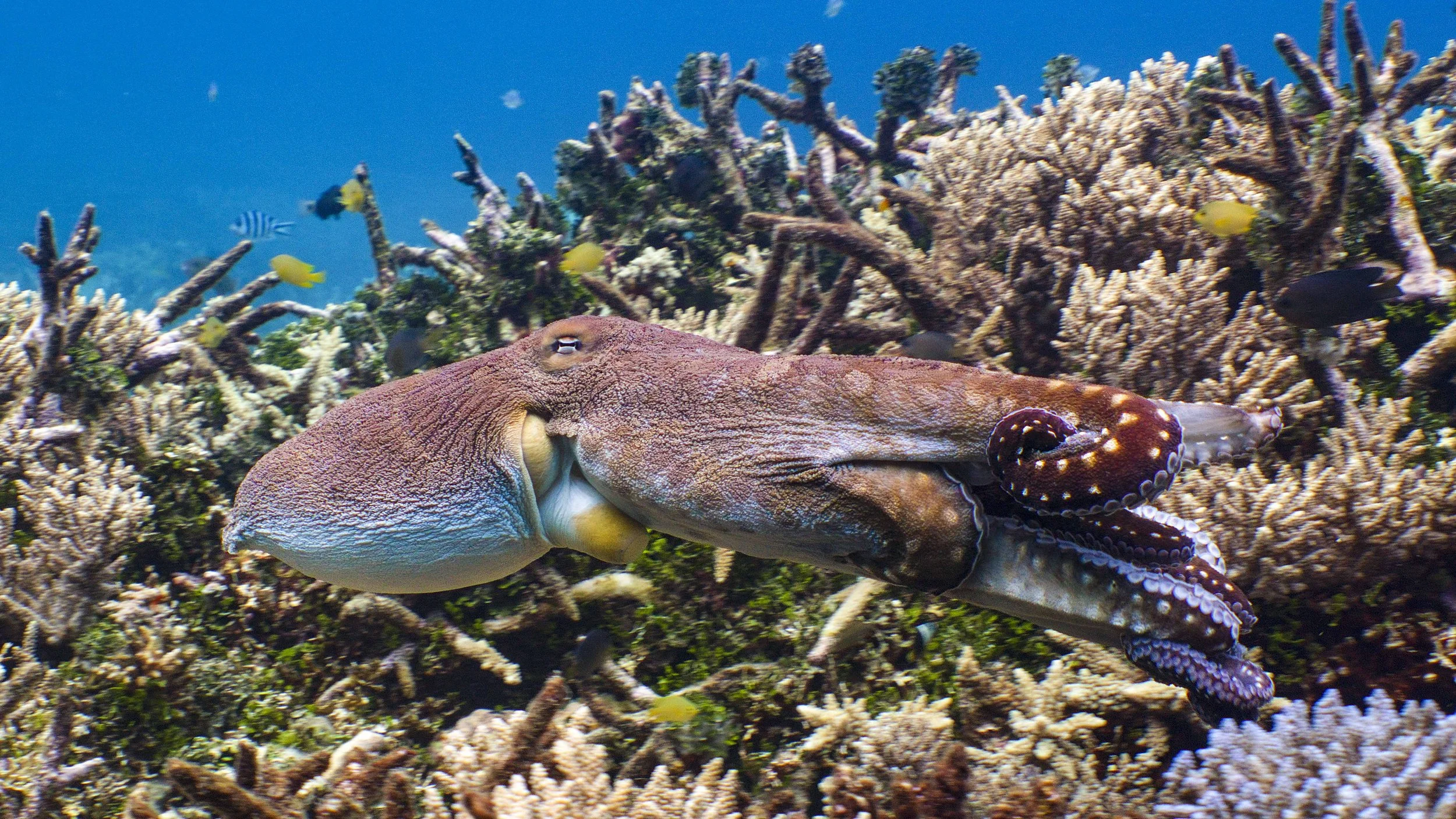
That patience is what led to this 8K octopus hunting stock footage sequence.
Understanding Octopus Behaviour Before You Hit Record
Day octopus are serious predators. When they hunt, there’s intent behind every movement.
They move across coral bommies using their arms almost like legs, then suddenly jet across open sand when they feel exposed. As they transition between coral, rubble, and sand, their skin shifts constantly. Colour, contrast, texture. It’s not dramatic for the sake of it. It’s camouflage working in real time.
In this sequence, you can see the octopus probing into crevices, feeling for crabs and small reef fish. It pauses, recalibrates, then moves again. Every decision is calculated.
To capture that kind of natural behaviour on the Great Barrier Reef, you need more than just a good camera. You need time in the water.