
Why I bought a RED Raptor for underwater cinematography
If you’ve been following my work lately you have probably seen that I’ve recently invested quite a bit into a new camera system. What I bought is Nauticam’s RED Digital Cinema Raptor system, and while I probably should have used the money on a down payment for a house, I’d like to share why I decided to invest the money into a RED instead, and maybe, maybe, why you should as well… but probably not. That’s bad advice.
So why did I buy a camera that costs 15 times more than my car. And It’s a pretty good question. Usually these sorts of discussions dive straight into talking about image quality and frame rates, and RED Code RAW Recording, and while that gets me all very hot and bothered, it has very little to do with why I actually bought one.
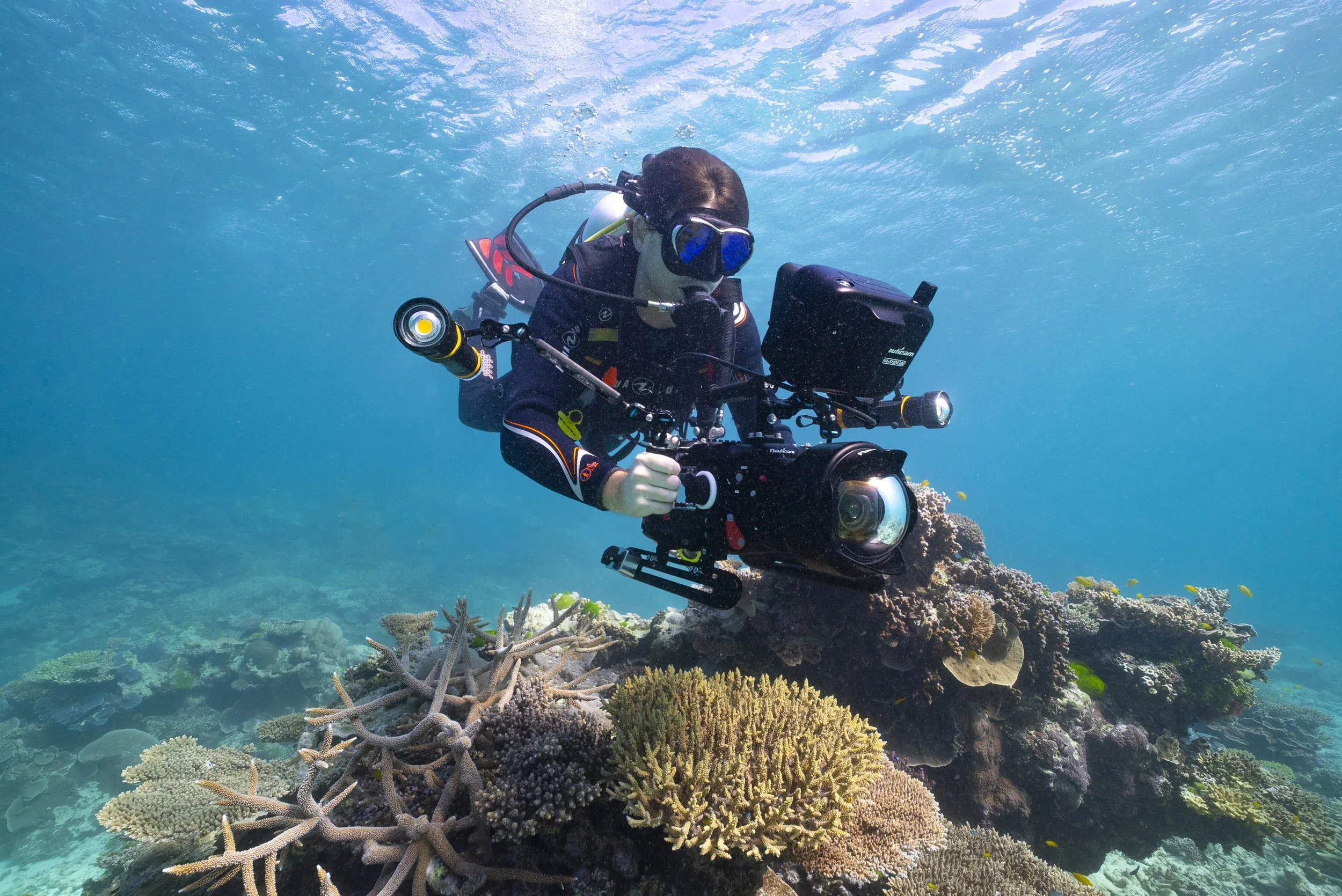
To provide a little background, I’ve been working as an underwater cinematographer for over a decade now, and throughout that time most of my clients have been tourism clients, largely from government tourism boards, and ocean based commercial companies. I absolutely love this sort of work, and run a production company specialising in tourism and underwater filmmaking where we have a range of long term clients that I love working for, but a part of me has also been looking for the next challenge, and I’ve also had an increasing number of inquiries into documentary filming with cinema equipment.
I know this is going to sound cockey, but having produced ocean based tourism film projects for over a decade, I feel that my team and I have an extremely good grasp on the technical art of underwater filmmaking. We know the ins and outs of the tourism world, and we have worked our way fairly high up the ladder of underwater filmmakers in this industry. But learning never stops, and while I am definitely still going to be working in the tourism film industry, I’m also looking for new experience and skills.
Its for this reason that I have been pursuing personal film projects, and self funding my own natural history wildlife films and conservation documentaries. Through these self funded wildlife film projects I am able to learn additional skills, and really dive into a new world of storytelling. It’s also why I purchased a RED.
Originally I bought it to expand my experience using cinema cameras, from filming underwater through to post production, on a system that is recognised and used on high end documentary and underwater film projects. I have worked on documentary projects in the past and rented RED’s, but this investment is very much a leap into the world of documentary cinema.
Having worked on a number of these documentary projects, it’s clear that experience is something that you have to have before you get the job. Being able to use the RED on larger commercial underwater shoots and TVC’s, as well as my own self funded natural history projects which are winning awards in film festivals and being showcased in cinemas is a great way to do that, while simultaneously getting credibility as a DP with experience using the required equipment.
This camera was very much an investment into my own skills as an underwater DP, and was done in the hopes of learning as much as possible in that more prestigious world of documentary cinema.
And I can say that since stepping into this world my experience owning and using RED’s underwater has opened a variety of doors for me since purchasing it, and it has brought me projects that I otherwise wouldn’t have gotten. And while it’s fun to say that gear doesn’t matter, one of the first questions almost every single natural history production company has asked me, is what cameras do you own and have experience using, and in this world, strong experience with RED Digital Cinema is almost a requirement.
Honestly, the camera has almost paid for itself, just in the doors its opened alone. Among various other things currently my team and I are deep into pre-production for an underwater conservation feature film destined for Netflix, that you guessed it, requires the use of RED Cinema Cameras. Without having the requisite experience using these cameras underwater we simply wouldn’t had even been considered for the project. And in case you are wondering, there’s almost no underwater dive housings available to rent should you wish to gain this experience another way.
It's no doubt an expensive way to get experience, but speaking from my experience as an underwater specialist, if you’re also looking to step into the documentary cinematography world, if you have ample experience in different realms of filmmaking, if you invest smartly, and at the right time given your circumstances, a camera like this has the ability to financially pay itself off in not too long, while also providing you with a wealth of experience and hopefully some new opportunities.
Im definitely not advocating to spend all your money on a camera that costs more than most house deposits, but if you are on the fence about diving into this world and have a wealth of experience filming other projects and commercials, I’m saying that it can be a wise investment if you have your business set up in that way and you’re ready for it.
I think I’m going to save the discussion around the benefits of the RED and using the R3D raw files underwater for a later blog as this one seems to have gone on longer than I anticipated. I hope you enjoyed the read, and I’ll catch you in the next one.